
Water Stains or Leaks
Discoloured ceilings, damp patches or water entering the home may indicate a problem with the roof or its drainage and flashing components.
A damaged roof can allow water into your home, affect surrounding roofing materials and create problems that become more difficult to address over time. Identifying the source of a roofing issue is an important first step towards choosing an appropriate repair.
From missing shingles and damaged flashing to roof leaks and storm-related damage, understanding the condition of your roof helps determine what work may be needed.
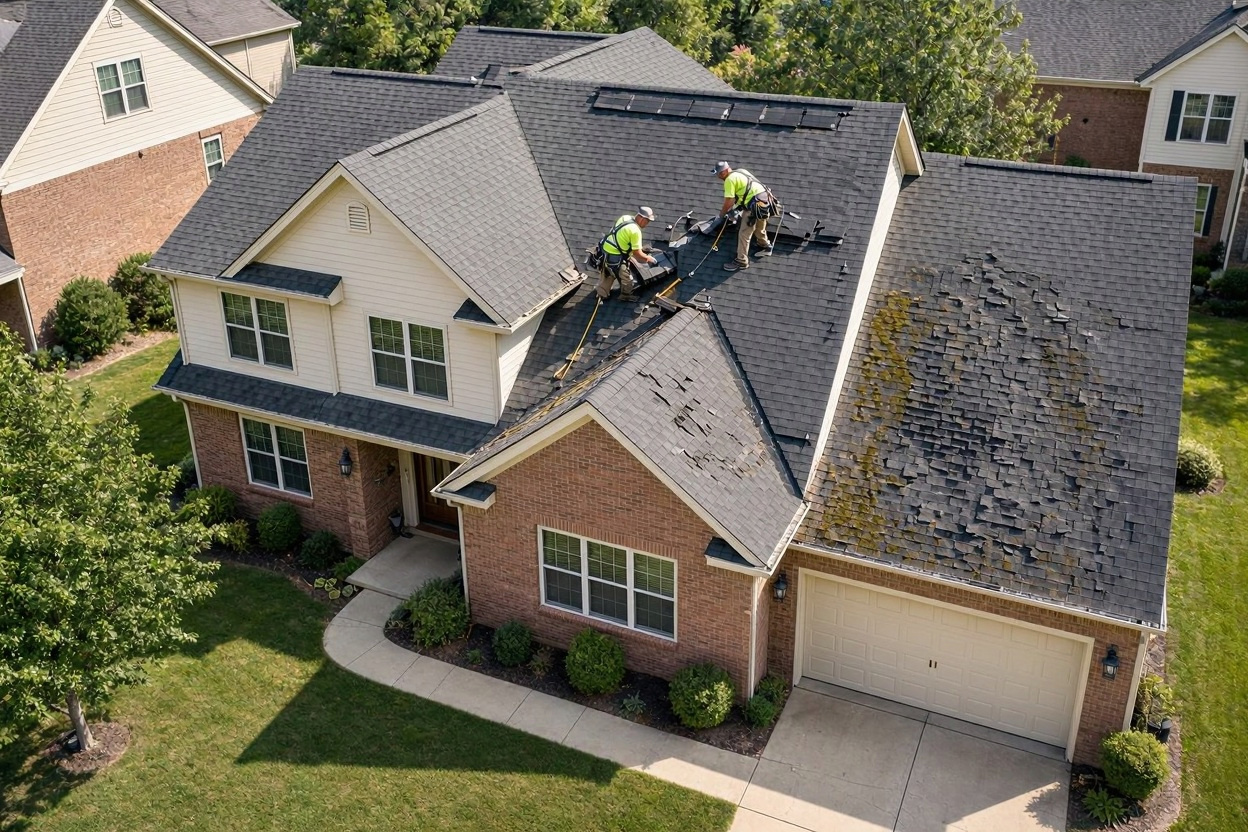
A residential roofing system is exposed to changing weather conditions throughout the year. Sun exposure, rainfall, strong winds and hail can all contribute to wear or damage. Even a relatively small problem can affect other parts of the roof if it is left unaddressed.
Roof repairs can involve individual shingles, flashing, roof penetrations, damaged seals, underlayment or other components. The correct approach depends on the location and extent of the damage, the condition of the surrounding materials and the overall age of the roofing system.
One important part of the process is identifying the actual source of a problem. A water stain on an interior ceiling, for example, does not necessarily indicate that the damaged area is directly above it. Water can travel along roof components before becoming visible inside a property.
A careful assessment helps establish whether a targeted repair may be appropriate or whether wider roofing work should be considered.
Roofing problems are not always obvious from the ground. These signs may indicate that further inspection is worthwhile.
Discoloured ceilings, damp patches or water entering the home may indicate a problem with the roof or its drainage and flashing components.
Shingles that are cracked, lifted, curled or missing can leave parts of the roof more exposed to wind and rain.
Loose, deteriorated or incorrectly sealed flashing around roof features can create potential entry points for water.
Severe weather can damage shingles, roof accessories, flashing and other exposed parts of a roofing system.
An unusual amount of shingle granules in gutters or downspouts may be a sign of roofing material deterioration.
Deteriorated seals around vents, pipes and other roof penetrations may allow moisture to enter the roof assembly.
These signs do not automatically mean that a repair is required. A closer assessment is needed to determine the cause and suitable next steps. Avoid climbing onto a damaged or wet roof.
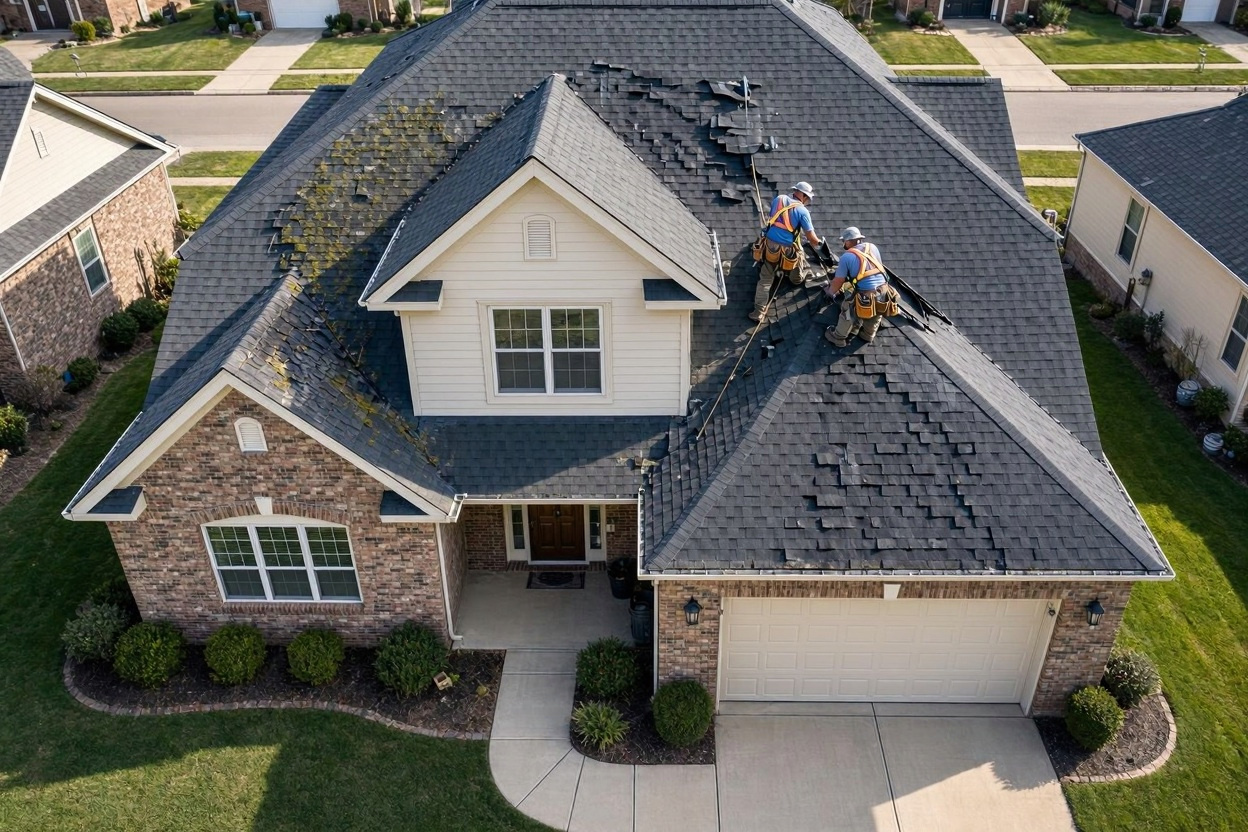
The scope of a roof repair depends on the problem identified during the assessment. Work may involve one or several roofing components.
Removing and replacing individual damaged or missing shingles where the surrounding roof condition allows.
Examining the roof area and related components to help identify where water may be entering.
Addressing damaged or deteriorated flashing around chimneys, roof edges, valleys and other transitions.
Inspecting and addressing vulnerable areas around vents, pipes and other roof openings.
Assessing and addressing damage associated with wind, hail or severe weather.
Checking accessible underlying components where damage or moisture concerns suggest further attention may be needed.
Reviewing the completed repair area and explaining any remaining observations or recommendations.
A structured approach helps establish the problem, clarify the proposed work and keep the repair process organised.
Discuss the issue, its location and any visible signs of damage or water entry.
Examine the relevant roof areas and components to help identify the likely source and extent of the problem.
Explain the findings, outline possible repair options and clarify the proposed scope of work.
Carry out the agreed work using materials and methods appropriate to the identified issue.
Review the repaired area and communicate any further observations that may require attention.
The exact sequence and scope of work may vary depending on roof access, weather, the type of damage and the condition of the existing roofing system.
Not all roofing issues have the same cause. Understanding the type of damage helps determine what should be inspected and which components may need attention.
Leaks can originate from damaged shingles, flashing, roof penetrations, valleys or other vulnerable areas. Finding the source is important before deciding on a repair.
Strong winds can lift, loosen or remove roofing materials. The surrounding area should also be checked for damage that may not be immediately visible.
Hail can affect shingles and other exposed roof components. The type and extent of damage depend on the storm and the materials installed.
Roof transitions and penetrations require suitable flashing details. Deterioration or damage in these areas can create paths for water entry.
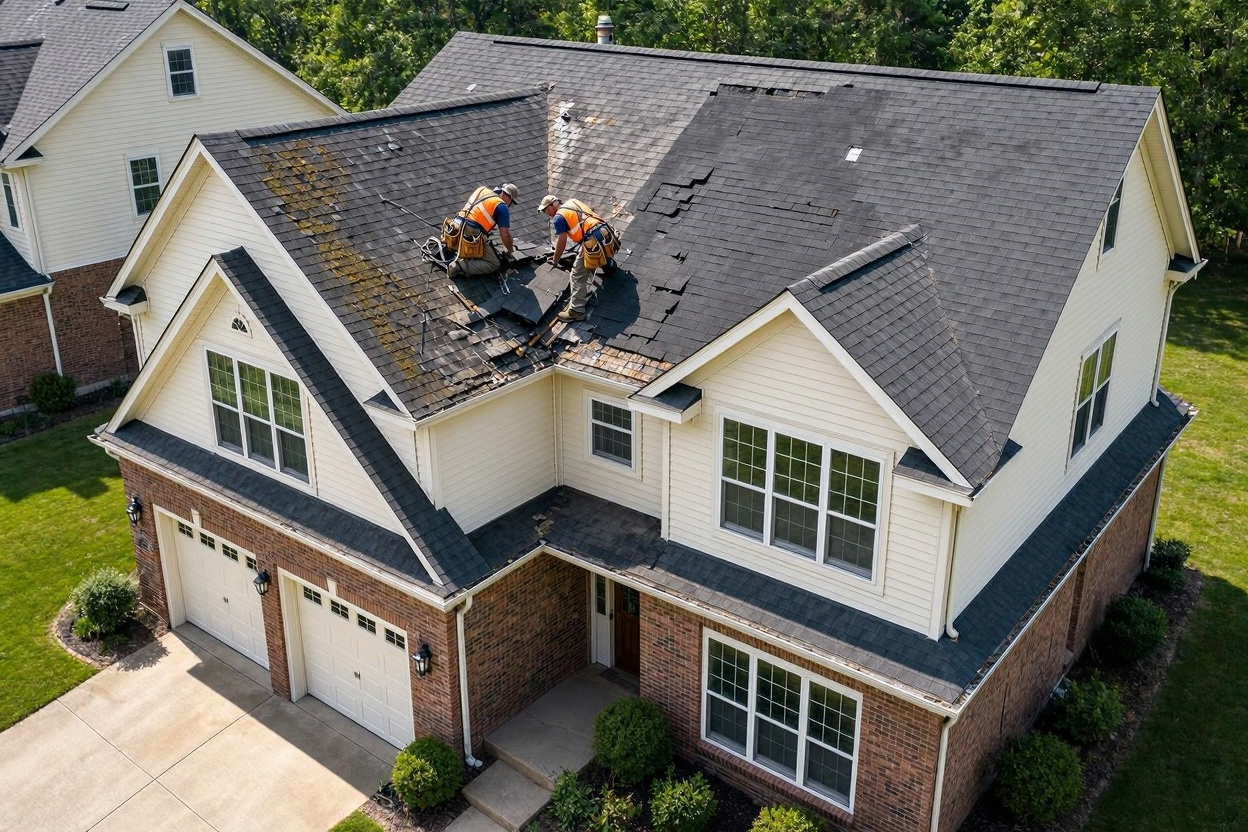
Roofing systems in North Texas experience a range of weather conditions. Local conditions can influence the type of damage that occurs and the materials involved in a repair.
Hail and storm activity can affect shingles, flashing and roof accessories. Damage should be assessed carefully rather than assumed from a ground-level view.
Wind can lift or dislodge roofing materials and expose areas that were previously protected.
Extended exposure to sunlight and high temperatures can contribute to the ageing of some roofing materials and sealants.
Heavy rain can reveal problems with drainage, flashing, roof transitions or damaged roofing materials.
Local weather exposure, roof design and material condition all influence the appropriate repair approach.
A repair may be suitable for isolated damage, while a roof with widespread deterioration may need a broader solution. The decision should be based on the roof's actual condition.
These are general considerations, not a substitute for a professional assessment. The appropriate option depends on the individual roof and the extent of any damage.
Understanding common roofing problems can help homeowners make more informed decisions about inspections and repairs.
Signs may include missing or damaged shingles, water stains, visible flashing damage, leaks or evidence of storm damage. Some problems are not visible from the ground, so an appropriate inspection may be needed to establish the roof's condition.
Even a small leak can allow moisture to enter roof assemblies, insulation or interior spaces. The extent of any resulting damage depends on how much water enters, how long the issue continues and the materials affected. It is sensible to investigate leaks promptly.
In some situations, individual damaged or missing shingles can be replaced. This depends on the condition of the surrounding materials, the availability of a suitable matching product and whether the damage is limited to that area.
No. Hail damage varies according to the storm, roofing material and extent of impact. Some situations may involve isolated repairs, while more extensive damage may require wider work. A proper assessment is needed before deciding.
An attic inspection may help identify signs of water entry, but the source often needs to be addressed from the roof exterior. The correct repair depends on the location and cause of the leak.
The time required depends on the type and extent of damage, roof access, material availability and weather conditions. A small repair may be relatively limited, while more involved work can require additional time.
If a property may have been affected by significant hail, wind or other severe weather, an appropriate roof assessment can help identify damage. Avoid climbing onto the roof yourself, especially if it may be unstable or wet.
An estimate should clearly describe the identified problem, proposed repair work, materials, relevant preparation, costs and any exclusions. It is also useful to understand whether additional work may be recommended if concealed damage is discovered.
These answers provide general educational information for this fictional demonstration website. Actual repair requirements depend on the property, roofing system and applicable building requirements.
Fill out the form and our team will get back to you within 24 hours with a transparent, no-obligation quote. Or, simply call us now.
Mon-Sat: 7am - 7pm
Complete the details below to get started.
Demonstration form only. Enquiries are not transmitted or stored.