
Persistent Leaks
Repeated leaks along seams, joints or damaged sections may indicate deterioration that is no longer practical to address with isolated repairs.
Your gutters play an important role in directing rainwater away from your roofline, exterior walls and foundations. When they become damaged, corroded or unable to drain properly, replacing the system can help restore effective water management around your home.

Review the condition of the existing system.
Consider suitable gutter materials and profiles.
Consider slope, outlets and downspout placement.
Direct rainwater away from vulnerable areas.
Gutters collect rainwater as it runs off the roof and channel it towards designated drainage points. Working together with downspouts and suitable discharge arrangements, they help prevent uncontrolled runoff from repeatedly soaking the areas immediately around your home.
Over time, gutters can deteriorate through exposure to weather, physical damage, corrosion, loose fixings and accumulated debris. Sections may begin to sag, joints can separate, and water may overflow or escape from places where it should remain contained.
Persistent drainage problems can contribute to water staining, soil erosion and moisture exposure around fascia boards, exterior walls and foundations. The consequences depend on the property's layout, soil conditions and how water is discharged.
Replacing an ageing or damaged gutter system provides an opportunity to review the entire drainage arrangement. The right solution considers roof size, roof edges, rainfall conditions, downspout locations and the route water takes after leaving the gutters.
Some gutter problems can be resolved with maintenance or isolated repairs. More extensive deterioration may indicate that replacing the system is the more practical option.
Repeated leaks along seams, joints or damaged sections may indicate deterioration that is no longer practical to address with isolated repairs.
Gutters that slope incorrectly, sag between fixings or pull away from the fascia may have damaged supports or deteriorated attachment points.
Rust, cracks, holes and physical deformation can compromise the gutter's ability to collect and carry rainwater.
Overflowing can result from blockages, inadequate capacity, poor slope or downspout problems. Persistent issues may require a review of the entire system.
Sections that repeatedly separate or leak at their connections may indicate worn components, movement or installation issues.
Poorly directed roof runoff may contribute to water collecting near exterior walls or foundations, particularly when downspouts discharge too close to the property.
Blocked gutters, undersized downspouts and drainage problems can produce symptoms similar to a failing gutter system. An assessment should establish whether cleaning, repair or full replacement is appropriate.
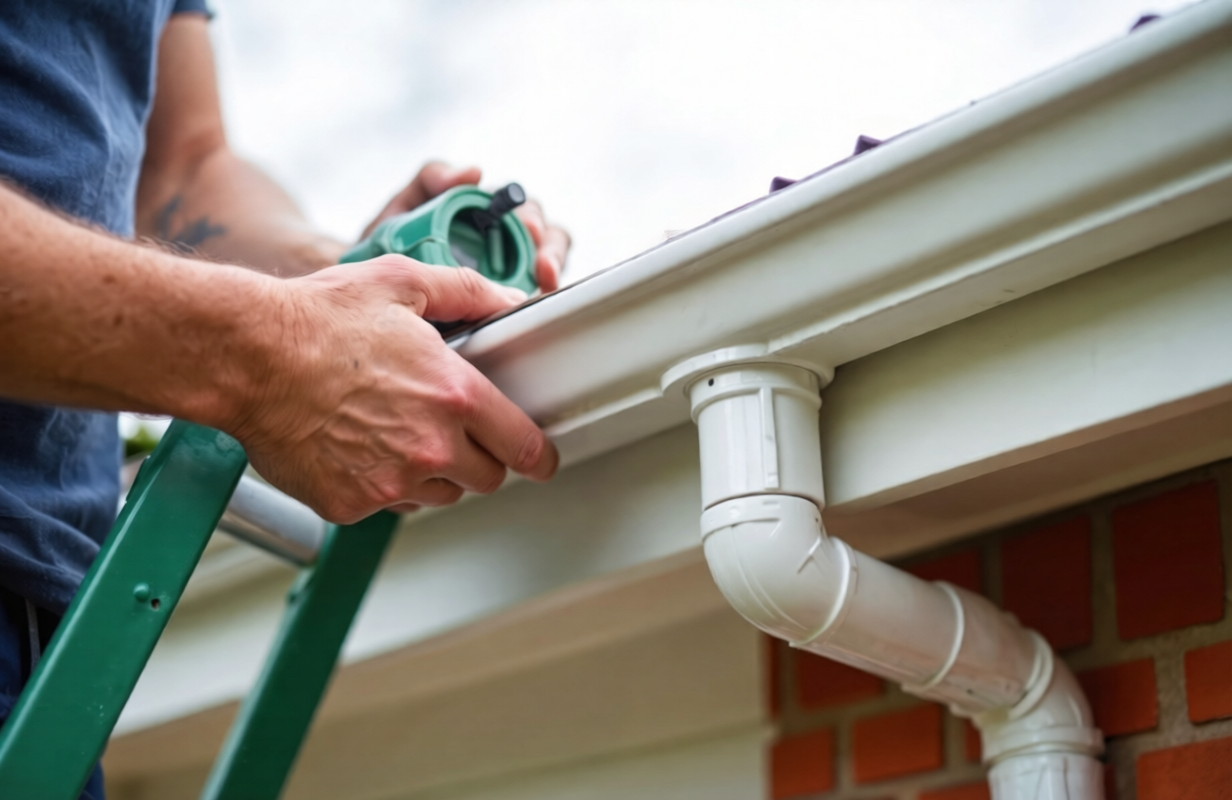
A gutter replacement should consider more than the visible gutter sections. The supporting components and drainage route all contribute to how effectively the system handles runoff.
Remove the agreed sections of the existing gutter system and review the condition of the exposed roofline.
Consider the condition of fascia boards, mounting surfaces and support points before installing new components.
Select a suitable gutter material, profile and configuration based on the property and project requirements.
Consider suitable brackets, hangers and fastening methods to support the gutter along the roofline.
Review outlet positions, downspout routes and how collected rainwater will be directed away from the building.
Review the completed installation for visible alignment, secure fixings and appropriate drainage arrangements.
Gutter materials differ in appearance, weight, maintenance requirements and cost. The most suitable option depends on the property, the intended installation and the homeowner's priorities.
Aluminium is a widely used gutter material because it is relatively lightweight and available in different profiles and finishes. It can be formed into seamless lengths for suitable installations.
Steel gutter systems offer a rigid option for properties where strength and a particular finish are important. Protective coatings and suitable maintenance are relevant considerations.
Vinyl gutters are made from plastic components and are commonly supplied in sectional systems. They offer a different installation and maintenance profile from metal gutter materials.
Material availability, product specifications and suitability should be confirmed for the individual project. No single material is automatically the best choice for every home.
A clear installation process helps ensure that the replacement system is considered as part of the property's overall roof drainage arrangement.
Discuss existing gutter problems, visible damage and any recurring drainage concerns around the property.
Review the roofline, gutter runs, fascia condition, outlet locations and downspout arrangements.
Consider appropriate materials, gutter profiles, support requirements and drainage routes.
Remove the agreed existing components and install the replacement gutters, outlets and downspouts.
Review the completed system, visible alignment and drainage arrangements before wrapping up the work.
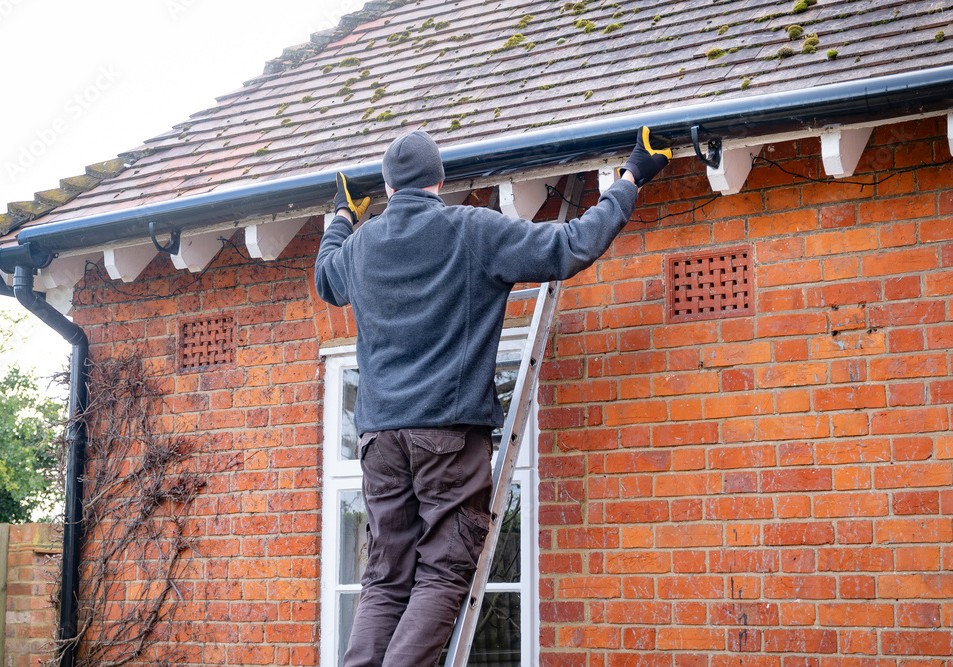
North Texas weather can bring periods of heavy rainfall, strong winds and seasonal storms. Gutter selection and installation should account for the roof's runoff and the way water is managed around the property.
Gutter capacity, roof area, slope and downspout arrangements all influence how effectively runoff is collected and discharged.
Secure attachment and appropriate support are important considerations where gutters are exposed to strong winds and storm conditions.
Leaves, twigs and other debris can obstruct gutters and outlets. Properties with nearby trees may need more frequent inspection and cleaning.
Downspouts should discharge water in a way that avoids unnecessary concentration near foundations, walkways and other vulnerable areas.
A complete gutter system relies on several connected components. Each plays a role in collecting, supporting and directing water away from the roofline.
When planning a replacement, it is useful to consider the condition and placement of each component rather than focusing only on the visible gutter sections.
Collect rainwater as it runs off the roof and carry it towards designated outlet points.
Support the gutter and secure it to the fascia or appropriate mounting surface.
Provide the connection between gutter channels and downspouts, allowing collected water to leave the system.
Carry water from the roofline towards the ground-level discharge point or connected drainage arrangement.
Close gutter ends and connect sections where the roofline changes direction.
Help limit the entry of some leaves and debris, although they do not eliminate the need for inspection and maintenance.
A small leak, isolated loose bracket or localised blockage may not justify replacing an entire gutter system. In these cases, cleaning, adjustment or a targeted repair may be enough.
Replacement becomes more worth considering when damage is widespread, multiple sections are failing, corrosion is extensive or the existing system no longer provides suitable drainage for the roof.
The condition of the fascia, mounting surfaces and downspouts should also be considered. Installing new gutters without addressing damaged support structures or poor discharge arrangements may leave underlying problems unresolved.
Answers to common questions about gutter materials, installation, drainage and maintenance.
Persistent leaks, widespread corrosion, repeated separation at joints, sagging sections and extensive physical damage may indicate that replacement is worth considering. An inspection can help determine whether repairs are sufficient.
Yes. Localised leaks, loose brackets or isolated damaged sections may be repairable. The condition of the remaining system should be considered before deciding whether a targeted repair or complete replacement is more practical.
Aluminium, steel and vinyl are common options, each with different characteristics. The right choice depends on the property's requirements, budget, appearance preferences, product availability and expected maintenance.
Seamless gutters are formed in continuous lengths for individual sections of a roofline, reducing the number of joints along the run. They still require properly installed corners, outlets and end connections.
Not necessarily. Existing downspouts may be suitable for reuse if they are in good condition and appropriately positioned and sized. Their capacity and discharge route should be considered when planning the replacement system.
Overflowing can be caused by blockages, insufficient gutter capacity, poor slope, misplaced outlets or inadequate downspout capacity. The cause should be identified before deciding whether the system needs adjustment or replacement.
Gutter guards may reduce the amount of some debris entering the system, particularly where leaves are a recurring issue. Their effectiveness depends on the product and surrounding conditions. They do not remove the need for periodic inspection and cleaning.
The duration depends on the property's size, the length and complexity of the roofline, material selection and whether fascia or other supporting components need attention. The project scope should determine the expected schedule.
Gutters and downspouts help collect and direct roof runoff away from the building. Their effectiveness depends on appropriate sizing, maintenance and a suitable discharge arrangement. They are only one part of the property's overall drainage system.
Cleaning frequency depends on nearby trees, roof debris, local weather and the gutter system itself. Properties with substantial tree cover may need more frequent inspection. Gutters should also be checked after significant storms.
If your gutters are leaking, sagging or struggling to handle runoff, an assessment can help establish whether repairs or a complete replacement are the right next step.
Request a Free EstimateDemonstration website for a fictional roofing business. Service descriptions and images are illustrative and do not represent verified projects, completed installations, credentials or customer results.
Fill out the form and our team will get back to you within 24 hours with a transparent, no-obligation quote. Or, simply call us now.
Mon-Sat: 7am - 7pm
Complete the details below to get started.
Demonstration form only. Enquiries are not transmitted or stored.