
01
Flexible Rubber Membrane
EPDM is an elastomeric material that can accommodate temperature-related movement. Its flexibility is one of the characteristics that make it suitable for many roof configurations.
COMMERCIAL ROOFING SYSTEMS
A proven single-ply rubber membrane roofing option for commercial buildings, valued for its flexibility, weather resistance and suitability for a range of low-slope roof applications.
A FLEXIBLE SINGLE-PLY SYSTEM
EPDM stands for Ethylene Propylene Diene Monomer. It is a synthetic rubber membrane widely used in commercial roofing, particularly on flat and low-slope buildings. The material is valued for its flexibility and ability to accommodate certain forms of building movement and temperature-related expansion and contraction.
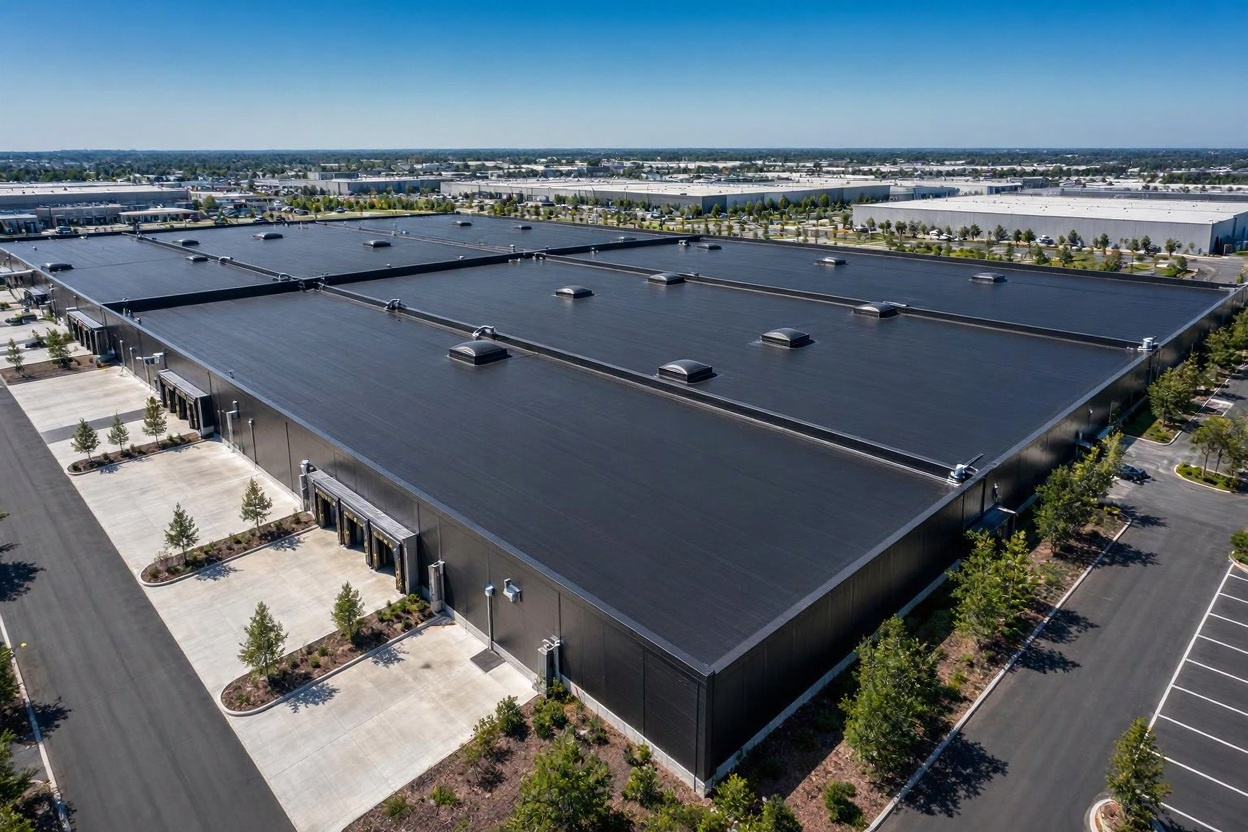
EPDM membranes are commonly supplied in black, although alternative product colours and configurations may be available. They can be installed using different attachment methods, including mechanically attached, fully adhered and ballasted systems where the roof design permits.
The suitability of EPDM depends on the roof structure, drainage, substrate, exposure, project requirements and the manufacturer's installation specifications. The complete roofing assembly should be considered rather than the membrane alone.
Arrange a commercial roof assessment →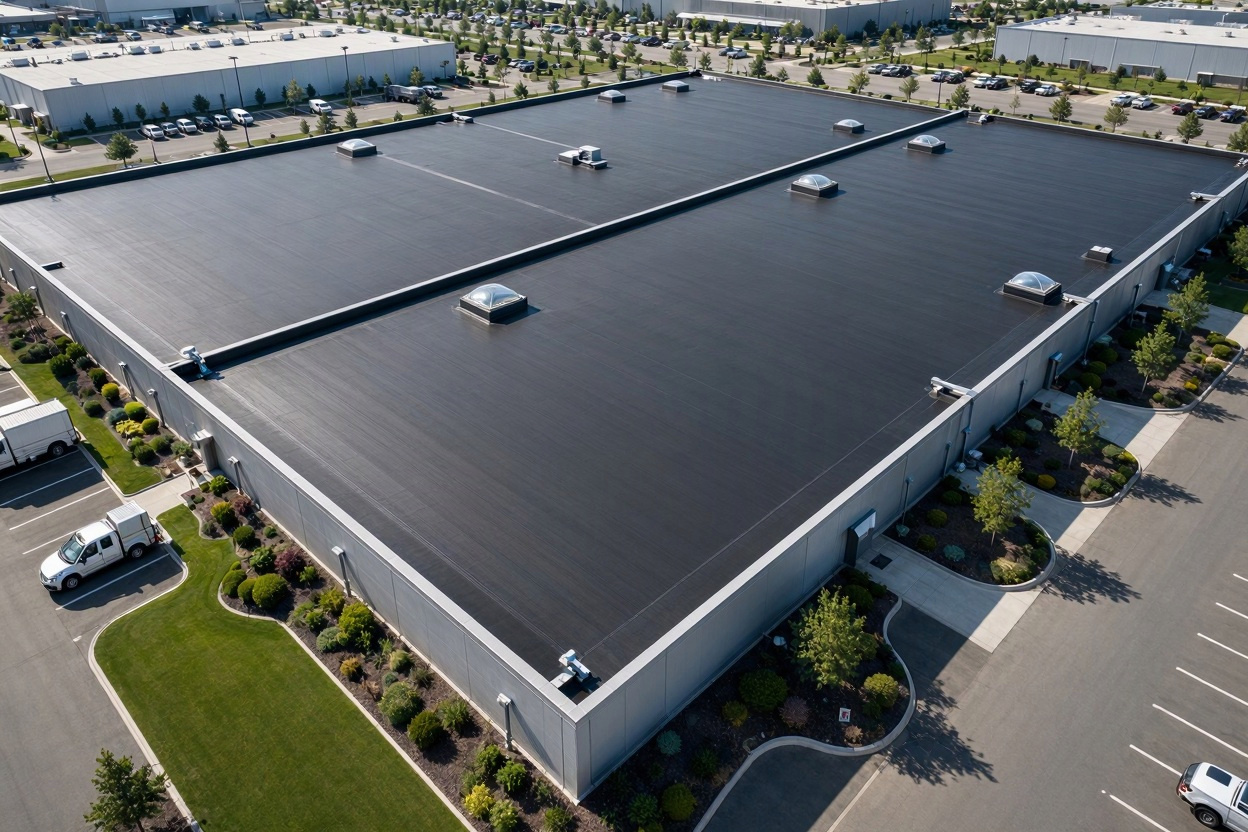
Flexible rubber membrane roofing for suitable commercial buildings
UNDERSTANDING THE SYSTEM
EPDM has been used in commercial roofing for decades. Its material characteristics and available installation methods make it an option worth considering for certain building types.
EPDM is an elastomeric material that can accommodate temperature-related movement. Its flexibility is one of the characteristics that make it suitable for many roof configurations.
EPDM products are designed for outdoor exposure and are commonly used in roofing systems that must withstand changing weather conditions. Product specifications vary.
EPDM is available in wide membrane rolls and sheets. Depending on the project, larger sheet sizes may help reduce the number of field seams required.
Mechanically attached, fully adhered and ballasted assemblies may be available, subject to the roof design, structural requirements and manufacturer approval.
Compatible repair materials and detailing products can be used to address certain types of damage, provided the existing membrane is suitable for repair.
EPDM has a long history in commercial roofing. Its established installation methods and product options make it a familiar system for many roofing professionals.
SUITABLE BUILDING TYPES
EPDM is found on many commercial and industrial buildings. Its suitability for a particular property depends on the roof design, structural requirements, exposure and selected membrane system.
Large low-slope roof areas where membrane selection, attachment methods, drainage and maintenance access need careful consideration.
Commercial properties where roof equipment, service penetrations and ongoing building operations influence the roofing project.
Suitable roof assemblies can be specified for office buildings with compatible low-slope roof construction and appropriate drainage.
Projects where building use, access restrictions, maintenance planning and disruption to daily operations must be taken into account.
SYSTEM CONFIGURATION
EPDM can be installed using several attachment methods. The correct configuration depends on the roof assembly, substrate, structural capacity, wind-uplift requirements and manufacturer's system specifications.
Fasteners and plates secure the membrane at designated locations. Seams and adjoining sheets are joined using compatible seam products and approved detailing methods.
An approved adhesive bonds the membrane to a suitable substrate or insulation surface. Correct preparation and application are essential to the finished system.
In suitable designs, ballast such as stone or pavers may be used to hold the membrane assembly in place. Structural loading, wind conditions and system approval must be considered.
THE DETAILS MATTER
A roofing membrane is only one part of the complete roof system. EPDM seams, perimeter details and transitions need particular attention during installation and inspection.
EPDM sheets are commonly joined using manufacturer-approved seam tape and bonding products. Surface preparation and correct application are important to seam integrity.
Perimeter details must be designed and installed to secure the membrane and manage transitions at roof edges, parapets and adjoining construction.
Pipes, vents, HVAC equipment and other roof penetrations require compatible flashing details to maintain the weather-resistant roof assembly.
Drains, scuppers, changes in roof level and adjoining surfaces should be addressed as part of the complete roof detailing plan.
FROM ASSESSMENT TO COMPLETION
A properly planned installation begins with an understanding of the existing building and the requirements of the selected EPDM system.
Review the existing roof covering, deck, substrate, drainage, penetrations and visible signs of deterioration.
Determine the suitable membrane specification, attachment method, insulation and detailing requirements.
Prepare the roof assembly in accordance with the selected system, including any necessary repairs or substrate work.
Position and secure the EPDM membrane, join sheets and complete the required perimeter and penetration details.
Review seams, flashings, terminations, drainage details and the finished roof assembly against project requirements.
Establish an inspection routine that considers roof use, equipment access, drainage and the manufacturer's guidance.
BEFORE YOU SPECIFY
EPDM can be a suitable option for many low-slope commercial roofs, but the right specification depends on the building and the complete roofing assembly.
Before selecting a system, it is important to understand the following considerations.
EPDM seams rely on compatible products and correct preparation. Contamination, poor application or incompatible materials can compromise seam performance.
Roof slope, drain locations and water flow should be assessed. Persistent ponding may require drainage improvements or further investigation.
Traditional black EPDM absorbs more solar energy than many reflective light-coloured membranes. Surface temperature and insulation requirements should be considered when comparing systems.
Regular access for maintenance, HVAC servicing and other equipment may require designated walkways or protective measures.
Repair products, adhesives, flashing materials and accessories must be compatible with the existing membrane and follow the relevant manufacturer's guidance.
Attachment methods and any ballast system must be suitable for the building's structural capacity, exposure and applicable wind-uplift requirements.
EXPLORE YOUR OPTIONS
Different roofing systems offer different material characteristics, installation methods and design options. Comparing the complete roof assembly is more useful than looking at membrane material alone.
A thermoplastic single-ply membrane commonly available with light-coloured reflective surfaces and heat-welded seams.
Explore TPO Roofing →ALTERNATIVE SYSTEMA multi-layer bituminous roofing system used on many commercial low-slope buildings.
Explore Modified Bitumen →ALTERNATIVE SYSTEMMetal panel systems that may suit a range of commercial roof designs and building requirements.
Explore Commercial Metal Roofing →No single roofing material is ideal for every building. Suitability, costs, warranties and expected service life depend on the selected product and project conditions.
COMMON QUESTIONS
Answers to common questions about commercial EPDM rubber membrane roofing.
EPDM stands for Ethylene Propylene Diene Monomer. It is a synthetic rubber material used in a variety of applications, including commercial single-ply roofing membranes.
EPDM is commonly used on flat and low-slope commercial roofs. The roof must still have a suitable design, supporting assembly and drainage arrangement.
Traditional EPDM roofing membranes are commonly black. Some manufacturers also offer alternative colours or coated products. Availability and specifications vary.
EPDM sheets are commonly joined using manufacturer-approved seam tapes and bonding products. Correct surface preparation, application and detailing are important to the finished seam.
In certain circumstances, an approved recover installation may be possible. The existing roof condition, moisture, substrate, structural requirements and manufacturer's specifications must be assessed before proceeding.
Service life varies with membrane specification, installation quality, climate, roof use and maintenance. Product documentation and the specific warranty should be reviewed when evaluating a proposed system.
Yes. Periodic inspections can help identify membrane damage, seam concerns, blocked drains, deteriorating flashings and problems around roof penetrations or equipment.
EPDM is a synthetic rubber membrane, while TPO is a thermoplastic membrane. They have different material characteristics, seam methods, product options and installation requirements. The best choice depends on the building and project specifications.
PLAN YOUR NEXT ROOFING PROJECT
The right roofing system starts with understanding the building. Let's discuss your property, existing roof and project objectives.