Existing Single-Ply Roofs
Some existing membrane roofs may be candidates for a coating system when the membrane is sound, compatible with the coating and properly prepared. Compatibility and adhesion testing are important.
A liquid-applied roof restoration option for suitable commercial roofing systems. Explore how silicone coatings can help protect existing roof surfaces when the assembly is properly assessed, prepared and maintained.
A commercial roof does not always need to be completely replaced when its surface begins to deteriorate. In certain circumstances, a liquid-applied coating system may provide a practical restoration option.
Silicone elastomeric coatings are designed to form a flexible, water-resistant layer over compatible roof surfaces. They are commonly considered for selected metal, single-ply and other commercial roofing assemblies.
The existing roof must be evaluated first. Moisture within the assembly, structural deterioration, drainage problems and incompatible materials can all affect whether a coating is appropriate.
Silicone roof coatings are applied in liquid form over a prepared roof surface. As the material cures, it forms a continuous, flexible coating designed to protect the underlying roof from weather exposure.
The coating is only one part of the system. Surface preparation, compatible primers, reinforced details and correct application thickness are all important to achieving the intended result.
A coating should never be treated as a substitute for repairing a deteriorated roof assembly or correcting unresolved drainage and moisture problems.
Discuss Your Existing Roof →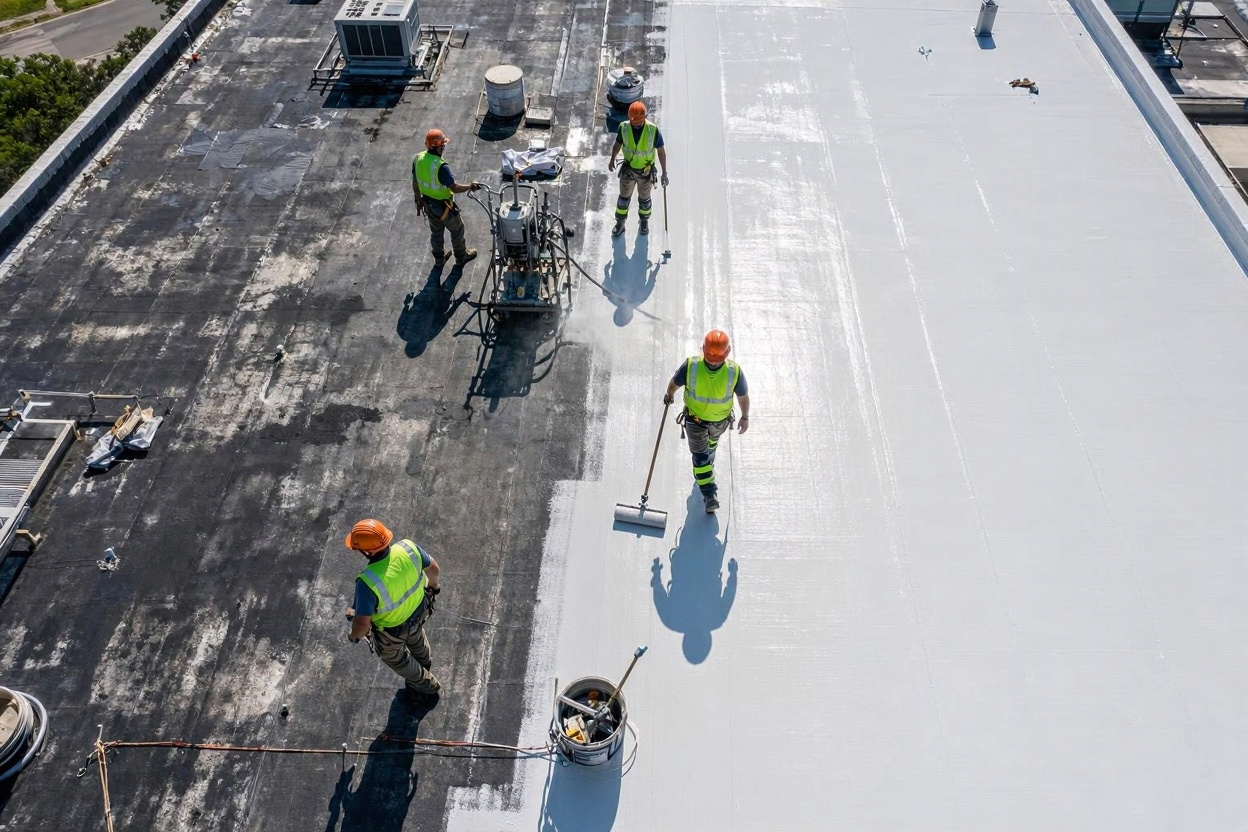
Silicone coatings can be considered for several types of commercial roof assemblies, provided the existing surface is suitable and the selected product is approved for that application.
Some existing membrane roofs may be candidates for a coating system when the membrane is sound, compatible with the coating and properly prepared. Compatibility and adhesion testing are important.
Silicone coatings may be considered for certain metal roofs where corrosion, seams, fasteners and other details have been properly evaluated and addressed before application.
Selected asphalt-based roof assemblies may be suitable, depending on their condition, surface characteristics and the coating manufacturer's approved system requirements.
Final suitability must be confirmed against the existing roof condition and the specific coating manufacturer's system requirements.
When correctly selected and installed, silicone coatings can provide several useful characteristics for suitable commercial roofing applications.
Silicone coatings are designed to form a water-resistant surface. Their suitability depends on correct preparation, application thickness, detailing and the condition of the underlying roof.
Many silicone coating formulations offer resistance to ultraviolet exposure, helping the coating withstand prolonged sunlight when correctly specified and maintained.
Coating systems can be applied to certain existing roof assemblies, potentially extending their service life without a complete tear-off when the roof is a suitable candidate.
Available light-colored finishes can reflect solar radiation. Any potential energy benefit depends on the coating, insulation, climate and overall building performance.
Applying a coating over an unsuitable or poorly prepared roof can lead to adhesion problems, premature failure and continuing water intrusion.
Preparation and repair work should follow the requirements of the selected coating system and take the existing roof assembly into account.
Arrange an AssessmentEvery restoration project should begin with an understanding of the existing roof and the requirements of the proposed coating system.
The existing roof is reviewed for leaks, surface deterioration, ponding water, damaged seams, weak details and other conditions that could affect the proposed coating system.
The roof assembly is evaluated to determine whether a silicone coating is appropriate. Existing materials, moisture conditions and manufacturer requirements all influence the recommendation.
The roof is cleaned and prepared using the specified method. Repairs, detail work, primers and reinforcement are completed as required by the selected system.
The coating is applied in accordance with the product requirements, including specified coverage rates, wet-film or dry-film thickness and weather limitations.
The completed application is reviewed for coverage, detailing and visible defects. Maintenance guidance and relevant product documentation can then be discussed.
Roof coatings are not suitable for every building or every roof condition. If the underlying roof assembly has extensive deterioration, significant trapped moisture or structural problems, a coating may not address the underlying issues.
In these circumstances, partial repairs, a retrofit system or a complete roof replacement may be more appropriate. The decision should be based on an assessment of the actual roof rather than the coating product alone.
Explore Other Commercial Systems →A professional assessment helps determine whether restoration is appropriate or whether a different roofing solution is needed.
Understanding the product, its limitations and the condition of the existing roof helps property owners make better-informed restoration decisions.
Ask About Your Project →It is a liquid-applied roof coating that cures into a flexible, water-resistant membrane. Silicone formulations are commonly used on selected commercial roof assemblies, particularly where UV exposure and water resistance are important considerations.
A coating may form part of a roof restoration solution, but simply applying coating over a leak is not a reliable repair. The source of water intrusion must first be identified, and damaged materials, seams, penetrations and flashings must be addressed as required.
No. Suitability depends on the existing roof material, condition, moisture, surface preparation and compatibility with the selected product. Manufacturer approval and, where appropriate, adhesion testing should guide system selection.
Some silicone products are designed to tolerate intermittent or prolonged water exposure better than certain other coating types. However, ponding should still be evaluated. Drainage problems, structural concerns and product limitations must be addressed rather than assuming the coating will solve them.
Service life varies with product formulation, application thickness, preparation, roof conditions, weather exposure and maintenance. Any expected service life or warranty should be based on the specific manufacturer's documentation and the installed system.
Some light-colored silicone coatings have reflective properties that can reduce solar heat absorption at the roof surface. The effect on indoor temperatures and energy consumption depends on the full building assembly, insulation, ventilation, HVAC equipment and local climate.
Yes. Periodic inspections can help identify damage, debris accumulation, drainage issues and deterioration around roof details. Maintenance requirements depend on the product and roof system.
Start with an assessment of the roof's condition, existing materials and restoration requirements before choosing a coating system.
Summit Roofing Solutions is a fictional demonstration business. This page is for illustrative purposes and does not represent a real roofing contractor or completed project.