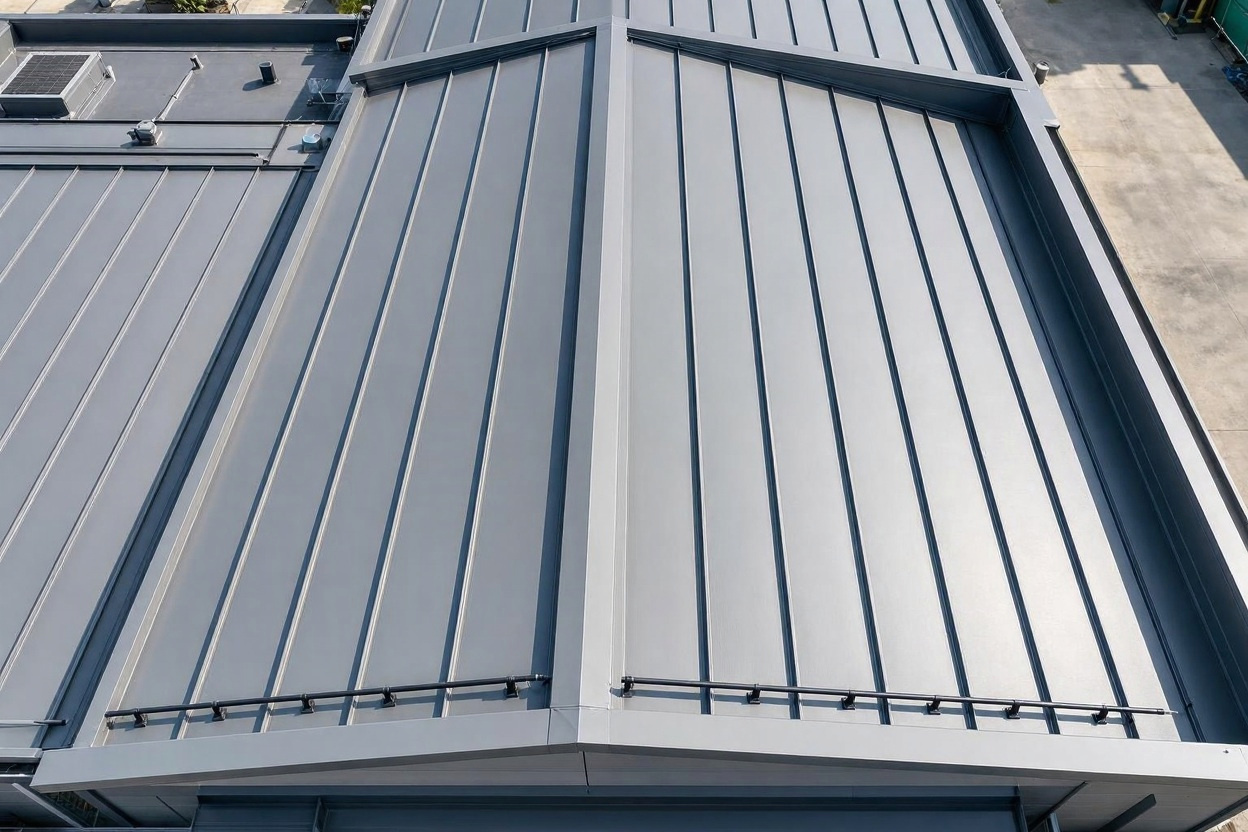
Standing Seam Metal Roofing
Standing seam systems use raised seams to connect metal panels while keeping many fasteners concealed. They are commonly selected for projects where clean lines, weather detailing and long-term performance are priorities.
Explore metal roofing solutions for commercial and industrial properties, from new installations and replacement projects to restoration and ongoing roof maintenance.
Commercial metal roofing is used across a wide range of buildings, including warehouses, offices, manufacturing facilities, distribution centers and retail properties.
The right system depends on more than the panel itself. Roof geometry, drainage, structural requirements, insulation, weather exposure and installation detailing all influence the performance of the finished assembly.
Summit Roofing Solutions can help property owners evaluate their existing roof, understand available options and plan a project around the building's requirements.

A commercial metal roof is a complete assembly. The panels, underlayment, clips or fasteners, insulation, flashings and drainage details all contribute to how the system performs.
Small detailing decisions can have a significant effect on long-term maintenance requirements. Thermal movement, water management and compatibility between materials should all be considered during planning and installation.
Discuss Your Roofing Project →When correctly specified and installed, a metal roofing system can offer several practical advantages for commercial properties.
Metal roofing can provide a durable exterior covering when the panel material, coating, fastening system and installation details are suited to the building and its environment.
Correctly designed seams, flashings, penetrations and drainage details help manage rainwater and reduce the risk of water intrusion.
Certain finishes and coatings are designed to reflect more solar energy. Actual energy performance depends on the complete roof assembly, insulation, ventilation and building use.
Metal roofing is available in a range of profiles, finishes and colors, making it suitable for many commercial and industrial building styles.
Every commercial roof has its own requirements. A system that works well on one building may not be suitable for another.
Evaluating the existing structure and the intended roofing assembly helps establish a realistic scope and reduces the risk of overlooking important details.
Arrange an AssessmentA structured approach helps keep the project scope, system selection and installation requirements aligned.
We begin by reviewing the existing roof, identifying visible damage, corrosion, loose fasteners, failing sealants, drainage concerns and areas that may need closer investigation.
We consider the building's use, roof geometry, existing construction, environmental exposure and project requirements before identifying suitable metal roofing options.
The proposed scope outlines the recommended work, relevant materials, key details and project considerations so the property owner can make an informed decision.
Work is planned around the agreed scope, with attention to panel alignment, fastening, flashing, penetrations, safety procedures and manufacturer requirements.
The completed work is reviewed against the agreed scope. Any applicable maintenance recommendations and product documentation can then be discussed.
Have a question about an existing metal roof or an upcoming project? Here are some useful starting points.
Ask About Your Project →Service life varies considerably depending on the metal type, protective coating, installation quality, weather exposure, maintenance and building conditions. The manufacturer's specifications and the condition of the installed system are important factors when estimating its useful life.
Sometimes. If the roof structure and panels remain suitable, restoration may be an option. Extensive corrosion, structural deterioration, widespread water intrusion or unsuitable existing assemblies may make replacement or a retrofit more appropriate. A proper assessment is needed before deciding.
Standing seam systems typically connect panels using raised seams, with many fasteners concealed beneath the seams or clips. Exposed fastener systems use screws through the panel surface. Each has different installation details, maintenance considerations and project suitability.
In some cases, a retrofit system can be installed over an existing roof. This depends on structural capacity, existing roof condition, moisture, drainage, code requirements and the specific retrofit design. The existing roof should be assessed before this approach is considered.
Some metal roofing finishes are designed to reflect solar radiation and can contribute to lower roof surface temperatures. The effect on energy use depends on the building's insulation, ventilation, HVAC system, climate, roof color and overall construction.
Inspection frequency depends on the roof system, environmental exposure, manufacturer guidance and site conditions. Periodic professional inspections can help identify loose fasteners, deteriorating sealants, coating damage, corrosion and drainage issues before they develop into larger problems.
Whether you're considering a new installation, replacement or restoration, start with an evaluation of your building's roofing requirements.