
01
Multi-Layer Construction
Systems can incorporate multiple membrane layers and compatible components to create a complete roof assembly suited to the building's requirements.
COMMERCIAL ROOFING SYSTEMS
A multi-layer roofing solution engineered for commercial low-slope applications, combining reinforced bituminous membranes with carefully specified installation and detailing.
A MULTI-LAYER ROOFING SYSTEM
Modified bitumen is an asphalt-based roofing material enhanced with polymer modifiers to improve selected material properties. It is commonly supplied in reinforced rolls and used in commercial low-slope roofing assemblies.
The membrane typically incorporates a reinforcing layer, such as polyester or fibreglass, within the bituminous material. Depending on the specified system, one or more membrane layers may be installed to form the finished roof.
Two widely used categories are SBS-modified and APP-modified bitumen. They use different polymer modifiers and have different material characteristics and application requirements. Product selection should be based on the building, climate, roof design and manufacturer's specifications.
Arrange a commercial roof assessment →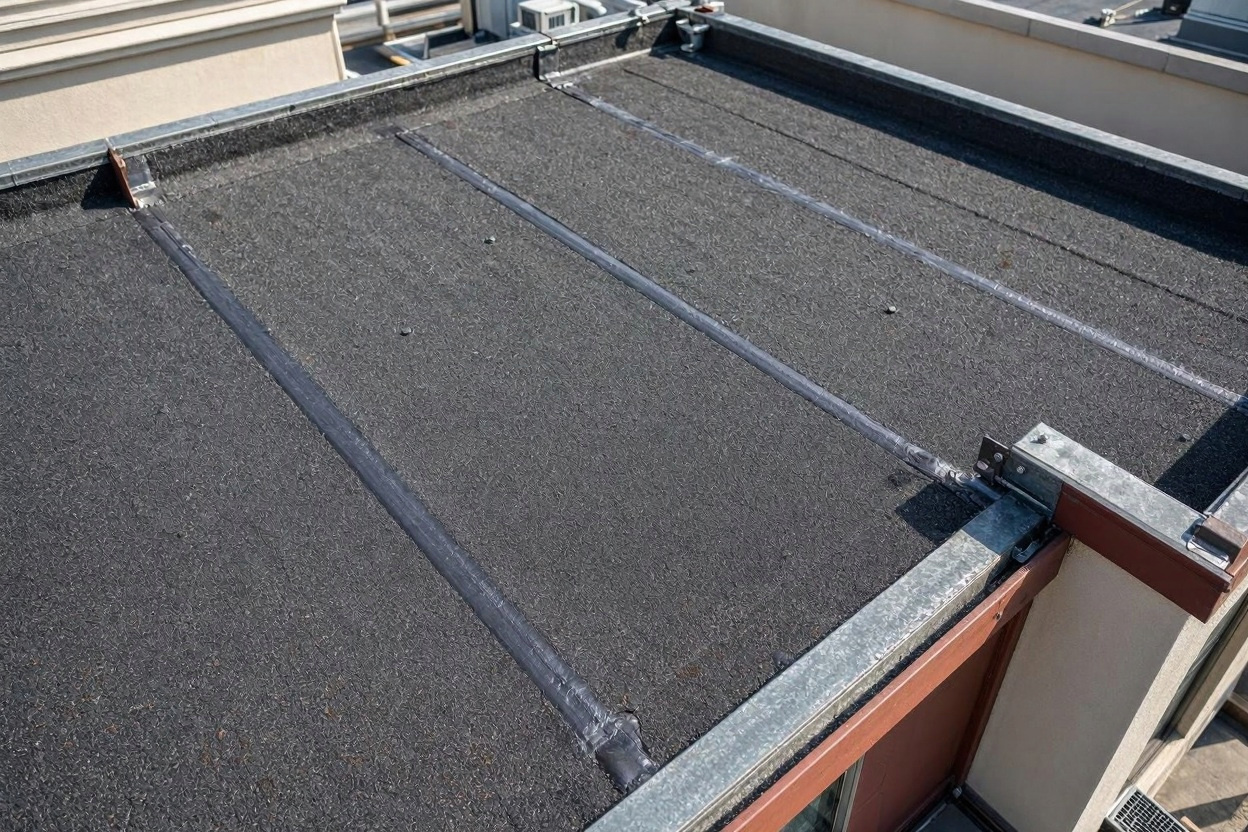
Reinforced bituminous membrane roofing for commercial applications
UNDERSTANDING THE SYSTEM
Modified bitumen combines traditional bituminous roofing technology with polymer-enhanced membranes. Its layered construction and available product configurations make it a practical option for a range of commercial buildings.
Systems can incorporate multiple membrane layers and compatible components to create a complete roof assembly suited to the building's requirements.
SBS and APP modifiers alter the properties of the bituminous material, influencing flexibility, temperature behaviour and application characteristics.
Reinforcing materials such as polyester or fibreglass provide dimensional stability and contribute to the physical characteristics of the membrane.
Depending on the product, membranes may be torch-applied, cold-adhered, self-adhered or installed using other manufacturer-approved methods.
Compatible membrane products and accessories can be used to address roof edges, penetrations, transitions and other critical areas.
Modified bitumen has a long history in commercial roofing, with established product specifications, installation practices and maintenance approaches.
UNDERSTANDING THE MODIFIERS
The two main categories of modified bitumen membranes use different polymers to modify asphalt. Understanding their differences helps when evaluating products for a particular commercial roofing project.
SBS is a synthetic rubber modifier used to enhance the flexibility and elastic characteristics of bitumen. SBS-modified membranes are commonly selected where flexibility and movement accommodation are important considerations.
APP is a plastic polymer modifier used to improve characteristics such as heat resistance and flexibility in bituminous membranes. APP-modified products are frequently associated with heat-welded installation methods, depending on the product specification.
Neither modifier is automatically the better choice for every building. Product formulation, reinforcement, installation method and project conditions should guide the specification.
SUITABLE BUILDING TYPES
Modified bitumen is used across a variety of commercial and industrial properties with suitable low-slope roof designs and supporting structures.
Commercial roof areas where membrane specification, drainage, insulation and access requirements need careful consideration.
Properties where roof equipment, service penetrations, perimeter detailing and building operations influence the roofing project.
Suitable low-slope roof assemblies where a reinforced bituminous membrane system meets the project's performance and construction requirements.
Roofing projects where building access, maintenance planning, operational disruption and long-term roof management must be considered.
SYSTEM CONFIGURATION
Modified bitumen membranes are available in different installation configurations. The selected application method must be compatible with the product, substrate, roof assembly and site conditions.
A controlled heat source is used to soften the underside of a suitable membrane and bond it to the prepared surface or preceding layer. This method requires trained installers and strict fire-safety controls.
A compatible roofing adhesive is used to bond the membrane without open-flame application. Product instructions, substrate conditions and application requirements must be followed.
Certain membranes feature a factory-applied adhesive layer protected by a release film. The installer removes the film and bonds the membrane to a suitable prepared surface.
Some systems use hot asphalt to bond membrane layers. This method is only appropriate where the specified system and product instructions permit its use.
BEYOND THE MEMBRANE
The finished roof is a complete assembly. Its components work together to provide the specified waterproofing, insulation, attachment and protection.
The structural base supporting the roof assembly. Its condition, construction and suitability must be assessed before installation.
Specified insulation can contribute to the building's thermal performance and must be compatible with the selected roofing system.
A base membrane may provide the initial waterproofing layer or serve as a substrate for subsequent membrane layers.
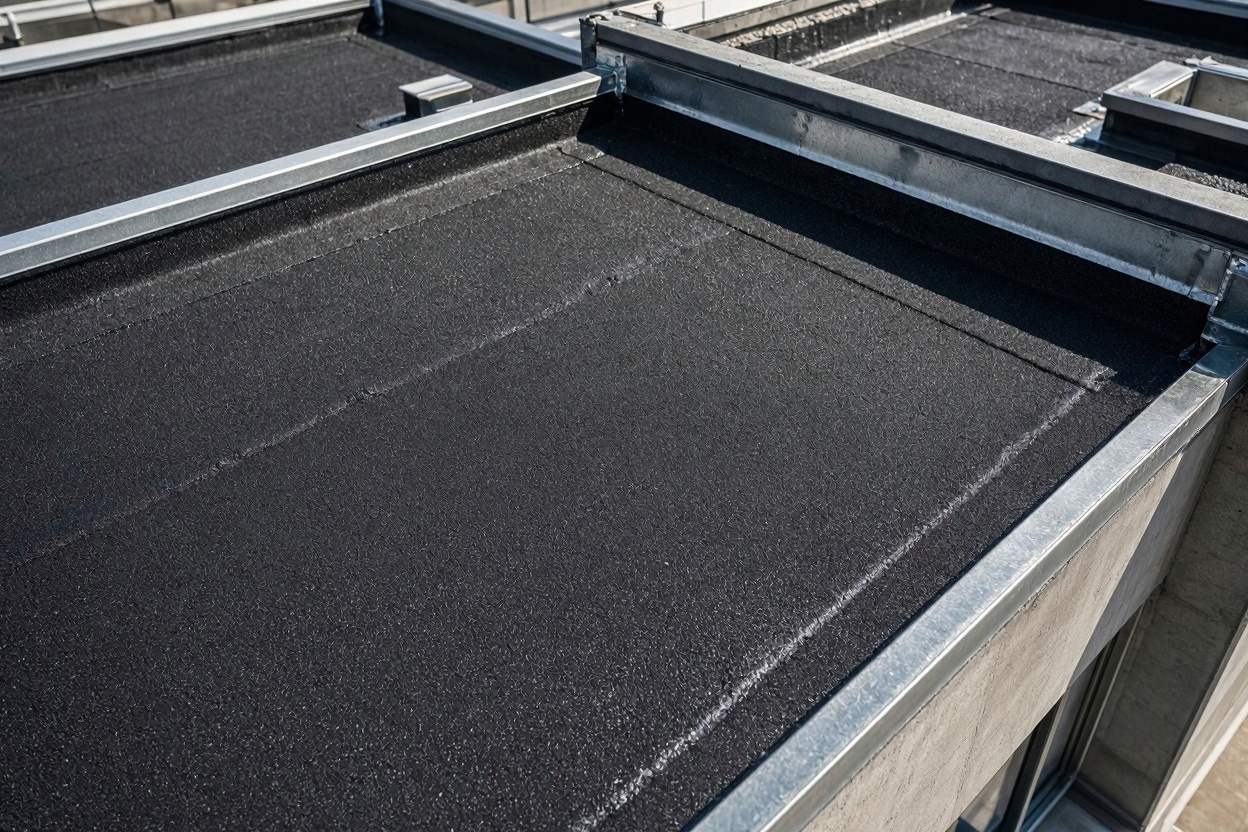
The upper membrane layer provides the specified weathering surface and may incorporate mineral granules or another protective finish.
Compatible materials and detailing address roof edges, parapets, penetrations and transitions within the complete assembly.
FROM ASSESSMENT TO COMPLETION
Careful planning, compatible materials and correct installation practices are essential to the finished commercial roofing system.
Review the existing roof, deck, substrate, drainage, insulation and visible areas of deterioration.
Determine the suitable membrane type, modifier, reinforcement, layer configuration and application method.
Prepare the roof deck and substrate in accordance with the specified assembly and manufacturer requirements.
Install the specified base and cap sheets using the approved attachment method and required detailing.
Review seams, overlaps, flashings, terminations, penetrations and drainage details against project requirements.
Establish an inspection routine that considers roof use, drainage, equipment access and manufacturer recommendations.
INSTALLATION SAFETY
Certain modified bitumen application methods involve heat, hot materials or other site-specific hazards. Safe installation requires appropriate planning, trained personnel and suitable controls.
Torch-applied systems require controlled work practices, suitable fire precautions and monitoring for potential ignition hazards.
Hot asphalt and heated roofing materials can cause serious burns. Appropriate equipment, protective measures and handling procedures are essential.
Roof-edge protection, fall-prevention measures and safe access arrangements must be considered as part of site planning.
Weather, ventilation, combustible materials, adjacent structures and occupied building areas can influence the appropriate installation method.
BEFORE YOU SPECIFY
Modified bitumen offers several system configurations, but the right specification depends on the complete roof assembly and the demands placed on the building.
These are important factors to review before selecting a product or installation method.
The roof deck, substrate and existing membrane must be assessed. Damaged, wet or unsuitable materials may require removal or repair.
Roof slope, drainage outlets and water flow should be reviewed. Persistent ponding may require corrective work or further investigation.
Base sheets, cap sheets, adhesives, primers, insulation and flashing products must be compatible with the selected system.
Torch-applied, cold-adhered and self-adhered systems have different installation requirements and site considerations. Not every method suits every building.
HVAC equipment, maintenance access and regular foot traffic should be considered when specifying protective measures and service routes.
Product warranties, installation requirements and maintenance obligations vary. The relevant documentation should be reviewed before work begins.
EXPLORE YOUR OPTIONS
Modified bitumen is one of several options for commercial low-slope roofs. The right choice depends on the building, installation requirements, performance objectives and long-term maintenance considerations.
A thermoplastic single-ply membrane commonly installed with heat-welded seams and available in reflective light-coloured finishes.
Explore TPO Roofing →ALTERNATIVE SYSTEMA synthetic rubber single-ply membrane used in a range of commercial low-slope roofing applications.
Explore EPDM Roofing →ALTERNATIVE SYSTEMMetal panel systems that may suit a range of commercial roof designs and building requirements.
Explore Commercial Metal Roofing →Roofing systems differ in construction, installation, maintenance and cost. A project-specific assessment is recommended before selecting a solution.
COMMON QUESTIONS
Answers to common questions about commercial modified bitumen roofing systems.
Modified bitumen is an asphalt-based roofing material enhanced with polymer modifiers. It commonly includes reinforcement such as polyester or fibreglass within the membrane.
SBS uses a synthetic rubber modifier that enhances elastic and flexible characteristics. APP uses a plastic polymer modifier that changes the membrane's temperature and material properties. Product specifications and installation methods vary.
Modified bitumen is commonly used on flat and low-slope commercial roofs. The roof design must provide suitable drainage and comply with the requirements of the selected roofing system.
No. Depending on the product, modified bitumen membranes may be installed using torch application, cold adhesives, self-adhered backing or other approved methods. The product specification determines the appropriate approach.
In certain situations, an approved recover system may be possible. The existing roof condition, moisture, structural capacity and compatibility of the proposed assembly must be evaluated first.
The number of layers depends on the specified system. Some assemblies use a base sheet and a cap sheet, while others incorporate additional components or layers.
Service life depends on the membrane specification, installation quality, roof design, climate, use and maintenance. Manufacturer documentation and project-specific warranties should be reviewed when evaluating a system.
Yes. Periodic inspections can help identify damaged membrane areas, open seams, deteriorating flashings, blocked drains and other issues that may need attention.
PLAN YOUR NEXT ROOFING PROJECT
The right system starts with understanding your roof. Let's discuss the building, existing conditions and requirements of your next roofing project.