Metal Roofing
Selected metal roof surfaces may be suitable for an aluminum coating system. Existing corrosion, loose fasteners, seams and damaged areas should be assessed and addressed before application.
A metallic reflective coating option for suitable commercial roof surfaces. Explore its potential applications, protective characteristics and the preparation required for a properly specified roofing project.
Aluminum roof coatings are used in selected commercial roofing applications to provide a metallic reflective finish over a compatible, properly prepared surface.
Rubberized formulations may incorporate flexible binders designed to accommodate some movement in the coating film. However, formulations differ, and the product's technical documentation determines where and how it should be used.
As with any roof coating, the condition of the existing assembly is critical. A coating is not a substitute for correcting structural deterioration, trapped moisture or unresolved leaks.
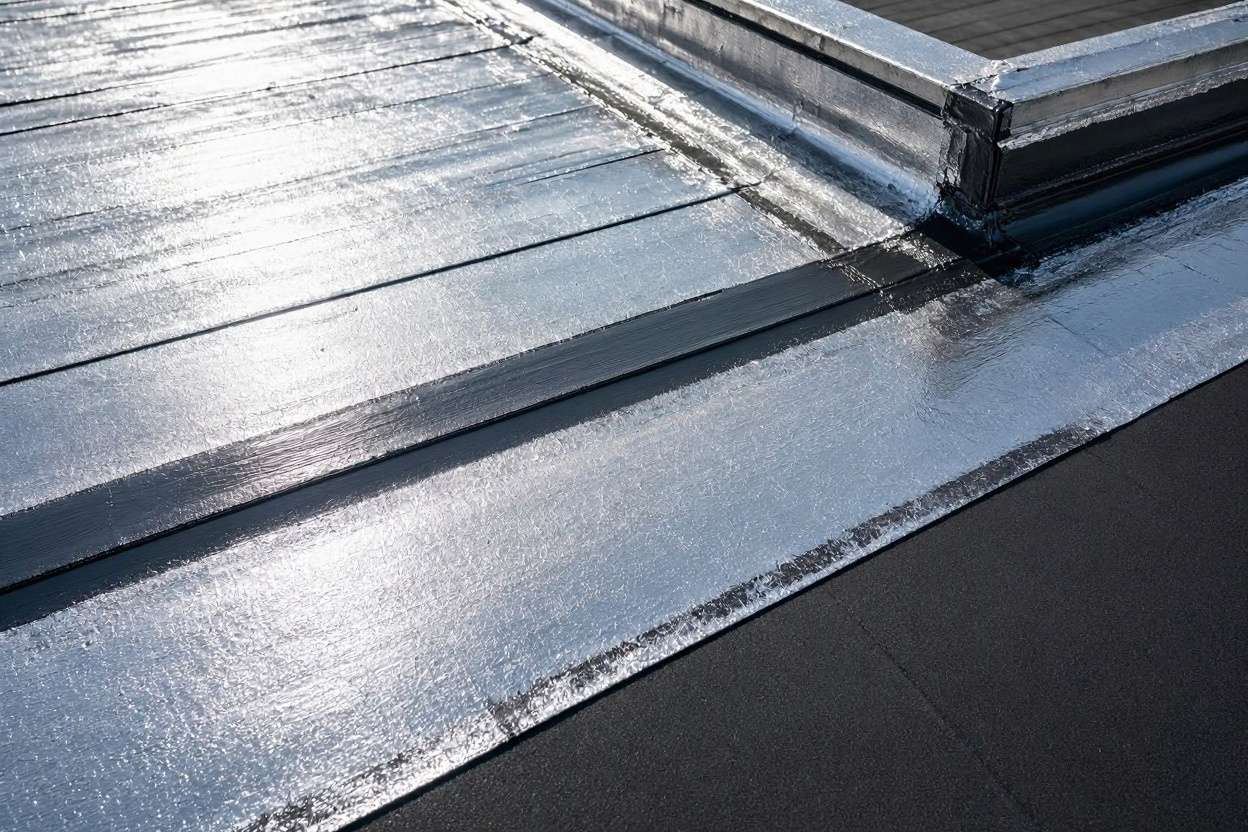
Aluminum-pigmented coatings are formulated to create a reflective metallic surface. Depending on the product, the binder may be asphalt-based or another specified formulation, with some products incorporating rubber-modified components.
This is different from a silicone elastomeric coating. The two coating types should not be treated as interchangeable: their chemistry, compatibility, application methods and performance characteristics can differ significantly.
The correct product must be selected for the roof material and project conditions, with preparation and application following the manufacturer's requirements.
Discuss Your Roofing Requirements →Product formulations vary, so the existing roof material and manufacturer's approved applications must guide system selection.
Selected metal roof surfaces may be suitable for an aluminum coating system. Existing corrosion, loose fasteners, seams and damaged areas should be assessed and addressed before application.
Certain asphalt-based roofing materials may accept aluminum roof coatings when the product is specifically approved for that surface and the roof is properly prepared.
An appropriate coating may form part of a maintenance or restoration programme for a roof that remains structurally sound and suitable for treatment.
These are potential application categories, not a guarantee that every product is suitable for every roof within each category.
When the selected product is compatible with the roof and correctly applied, an aluminum coating may provide useful characteristics as part of a planned maintenance or restoration project.
The aluminum-pigmented finish reflects a portion of incoming solar radiation. Actual reflectivity and performance vary by product, surface condition and application.
When compatible with the roof assembly, a coating can provide an additional protective surface layer against weather exposure.
For suitable roofs, coating can be considered as part of a planned maintenance strategy rather than automatically proceeding to full replacement.
Depending on the product and existing roof, coating may be included in a targeted restoration scope alongside repairs to seams, fasteners and other roof details.
Applying a reflective coating over dirt, loose material, active leaks or deteriorated roofing can compromise adhesion and the performance of the finished surface.
Preparation requirements differ between products and roof types. The selected manufacturer's application instructions should determine the correct cleaning, repair and priming procedures.
Arrange an AssessmentA successful coating project starts with the roof itself—not simply the choice of a reflective product.
The roof is reviewed to identify its material, condition, drainage characteristics and visible defects. The assessment helps establish whether a coating approach is worth considering.
The proposed coating is checked against the existing roof material and manufacturer requirements. Preparation, primer selection and any required testing are identified.
The roof surface is cleaned and prepared. Corrosion, loose fasteners, damaged seams, penetrations and other defects are addressed as required by the agreed scope.
The selected coating is applied in accordance with the product instructions, including specified coverage, application conditions and any required drying or curing periods.
The completed work is reviewed for visible coverage, detailing and defects. Relevant product documentation and ongoing maintenance considerations can then be discussed.
A reflective coating cannot restore a roof that has deteriorated beyond the point where a surface treatment is appropriate. Extensive corrosion, wet insulation, structural damage or widespread material failure may require more substantial work.
Drainage defects and active water intrusion must also be investigated. The coating should be considered only after the underlying roof condition has been understood.
Explore Other Commercial Roofing Systems →Where these conditions are present, repairs, a retrofit or roof replacement may be more appropriate than coating alone.
Get a clearer understanding of metallic reflective coatings, their potential uses and the factors that influence project suitability.
Ask About Your Project →The term generally describes an aluminum-pigmented roof coating formulated with a flexible or rubber-modified binder. Exact formulations differ between manufacturers, so the product data sheet should be checked to confirm its composition, approved surfaces and intended use.
Aluminum pigment creates a metallic finish that can reflect a portion of incoming solar radiation. The level of reflectivity depends on the formulation, application thickness, surface condition and age of the coating.
No. Product compatibility varies. Some aluminum roof coatings are intended for particular asphalt-based or metal surfaces, while others have different limitations. The existing roof material and condition must be checked against the manufacturer's instructions.
A coating should not be relied upon to repair an unresolved leak. The source of water intrusion must first be identified, and damaged seams, flashings, fasteners, penetrations or roofing materials must be repaired as appropriate.
No. They are different coating categories and can have different binders, properties, approved applications and maintenance requirements. Silicone coatings are generally silicone-based, while aluminum roof coatings commonly use an aluminum-pigmented asphaltic or other specified binder.
A reflective finish may reduce the amount of solar energy absorbed at the roof surface. Any effect on indoor temperatures or energy consumption depends on the coating's measured performance, insulation, ventilation, HVAC system, climate and building design.
Service life varies by formulation, application quality, coating thickness, roof condition, weather exposure and maintenance. The product manufacturer's technical documentation should be used when discussing expected performance or warranty coverage.
Yes. Periodic inspections help identify coating wear, surface damage, corrosion, debris accumulation and drainage issues. Any maintenance or recoating should follow the product manufacturer's recommendations.
Start with an assessment of your existing roof, its condition and the coating options that may be appropriate for the building.
Summit Roofing Solutions is a fictional demonstration business. This page is for illustrative purposes and does not represent a real roofing contractor or completed project.