Warehouses and Distribution Centres
Large roof areas, drainage capacity, insulation and access for maintenance are important considerations for warehouse and distribution facilities.
COMMERCIAL ROOFING SOLUTIONS
Commercial roofing systems require careful planning, suitable materials and reliable water management. Explore roofing options designed around the needs of your building and business.
ROOFING FOR COMMERCIAL PROPERTIES
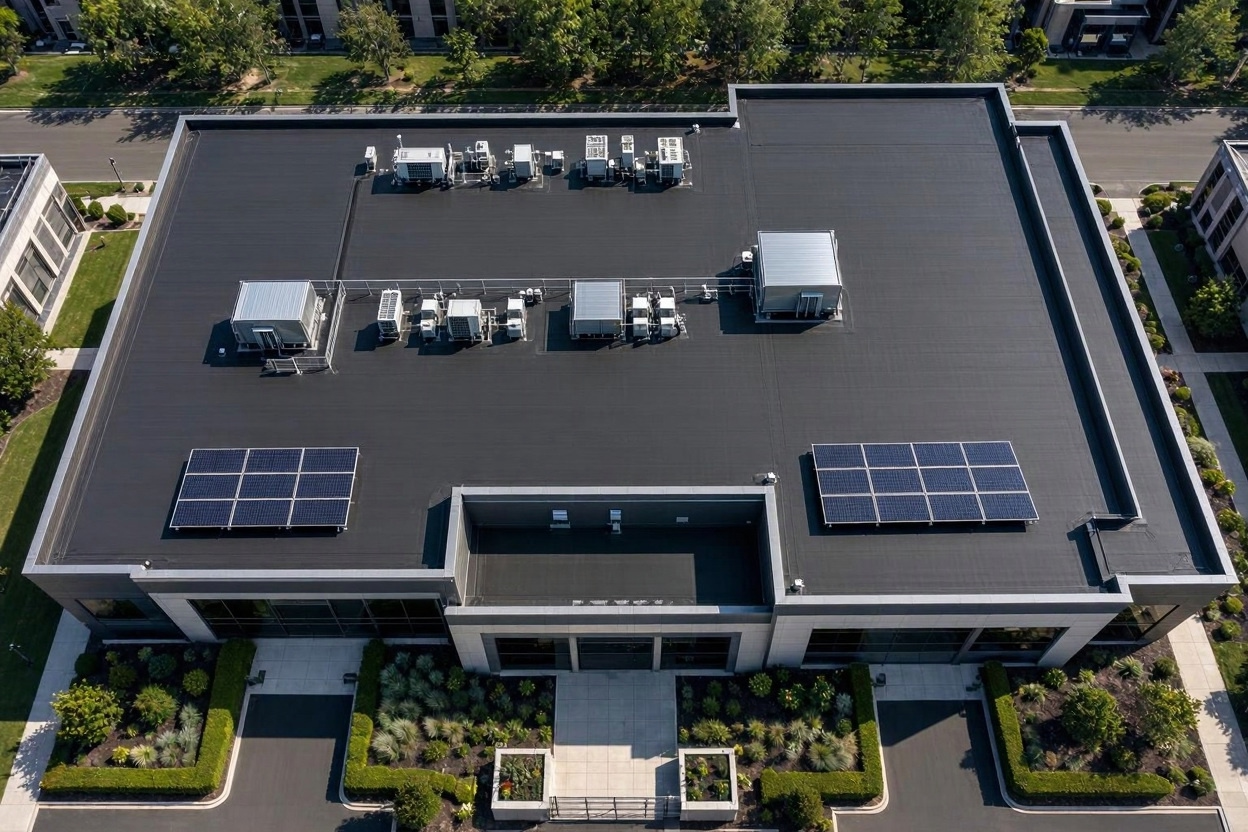
The roof of a commercial property plays an important role in protecting the building, its contents, equipment and day-to-day operations. The right roofing system must account for the building's structure, drainage requirements, insulation and intended use.
Warehouses, offices, retail properties and industrial facilities can have very different roofing requirements. Factors such as roof slope, existing construction, foot traffic and exposure to weather all influence which system may be appropriate.
Summit Roofing Solutions provides this guide to help property owners and decision-makers understand common commercial roofing systems and the considerations involved in selecting one.
 Commercial roofing systems
UNDERSTANDING YOUR OPTIONS
Different roofing systems are designed for different building conditions. Explore the options below to understand their construction, characteristics and practical considerations.
 01 / SINGLE-PLY MEMBRANE
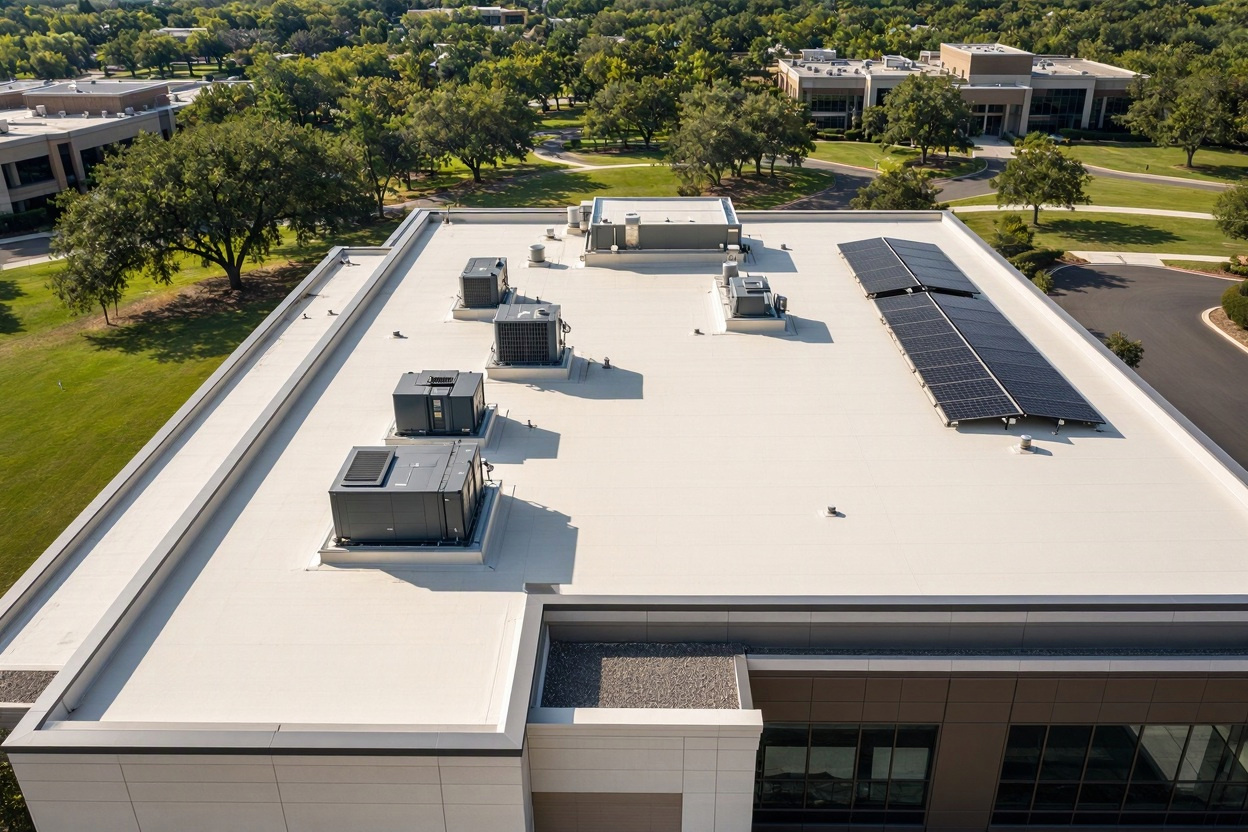
Thermoplastic polyolefin is a popular single-ply membrane option for many low-slope commercial roofing applications.
Explore TPO roofing →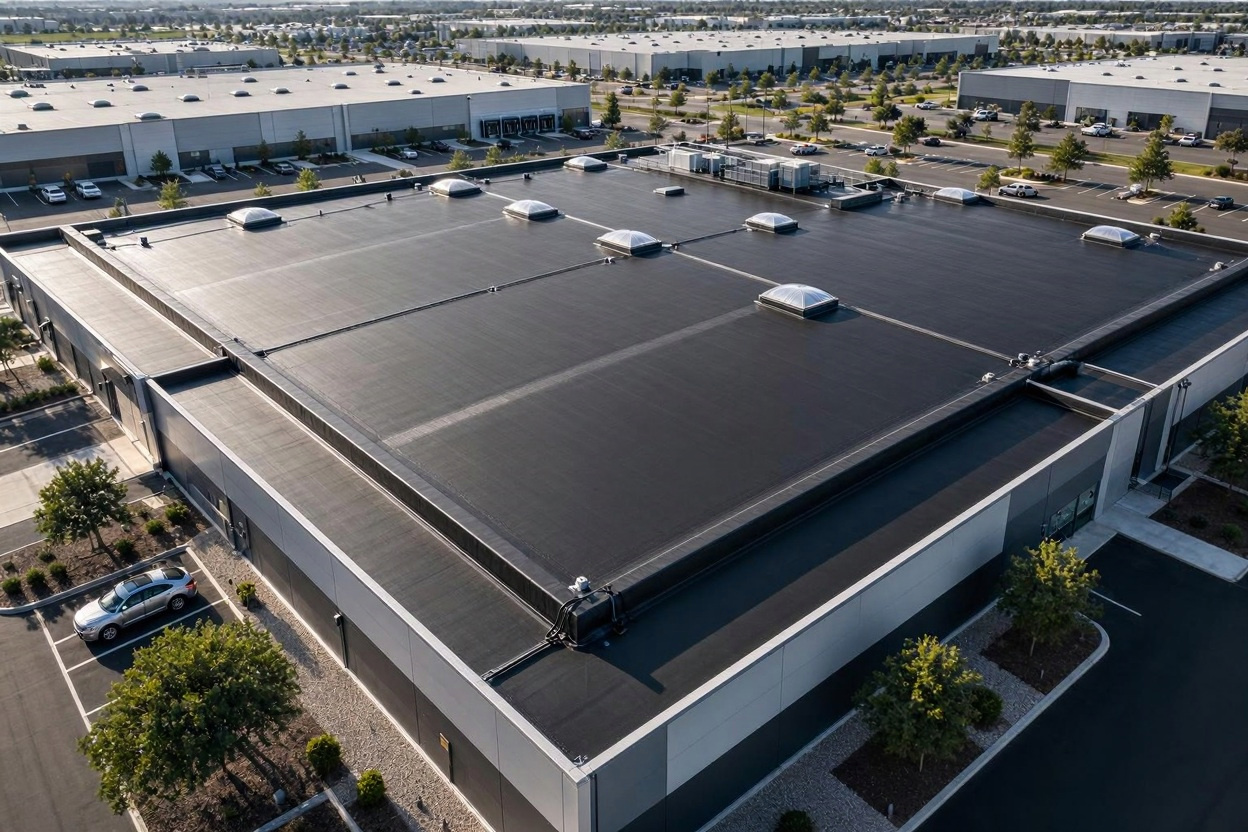 02 / SINGLE-PLY MEMBRANE
EPDM is a synthetic rubber membrane used on many low-slope roofs, with installation methods suited to different building requirements.
Explore EPDM roofing →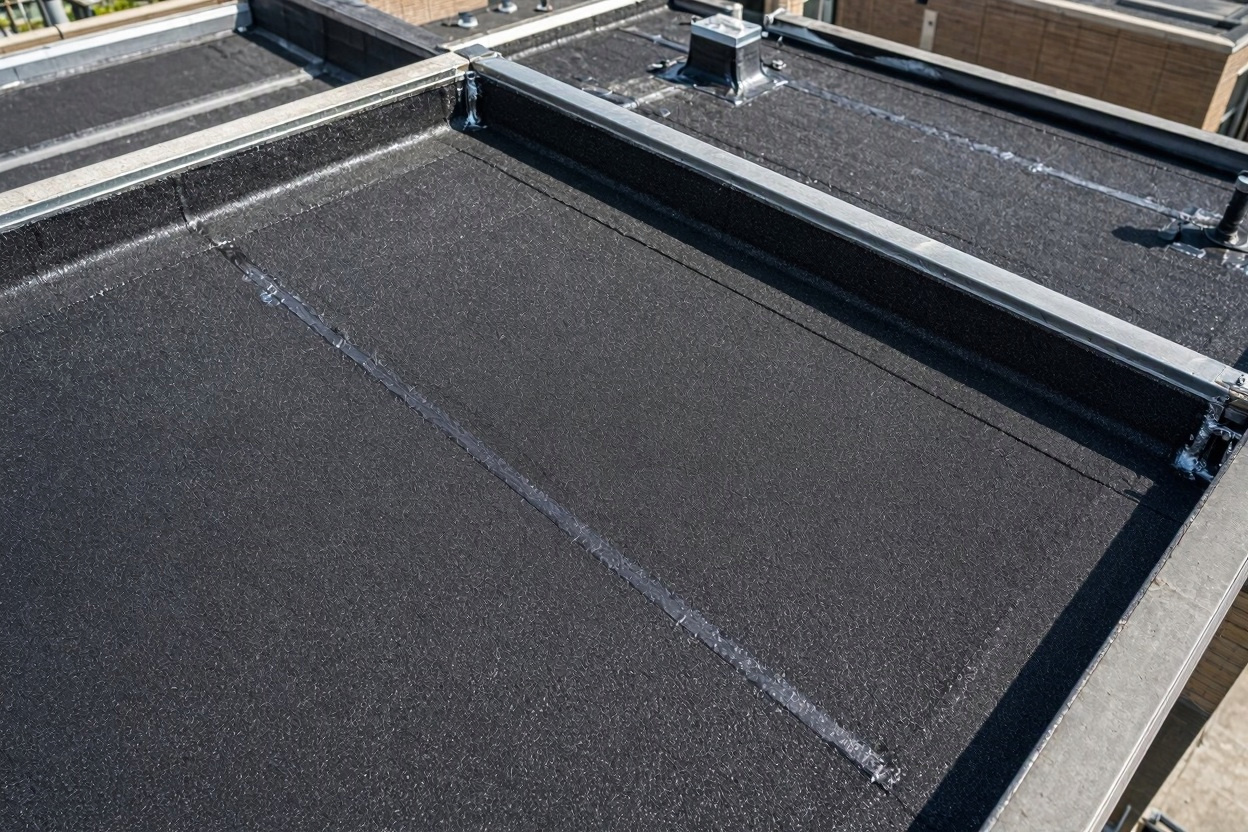 03 / MULTI-LAYER SYSTEM
A reinforced asphalt-based roofing system commonly used on low-slope commercial roofs where a multi-layer assembly is appropriate.
Explore modified bitumen →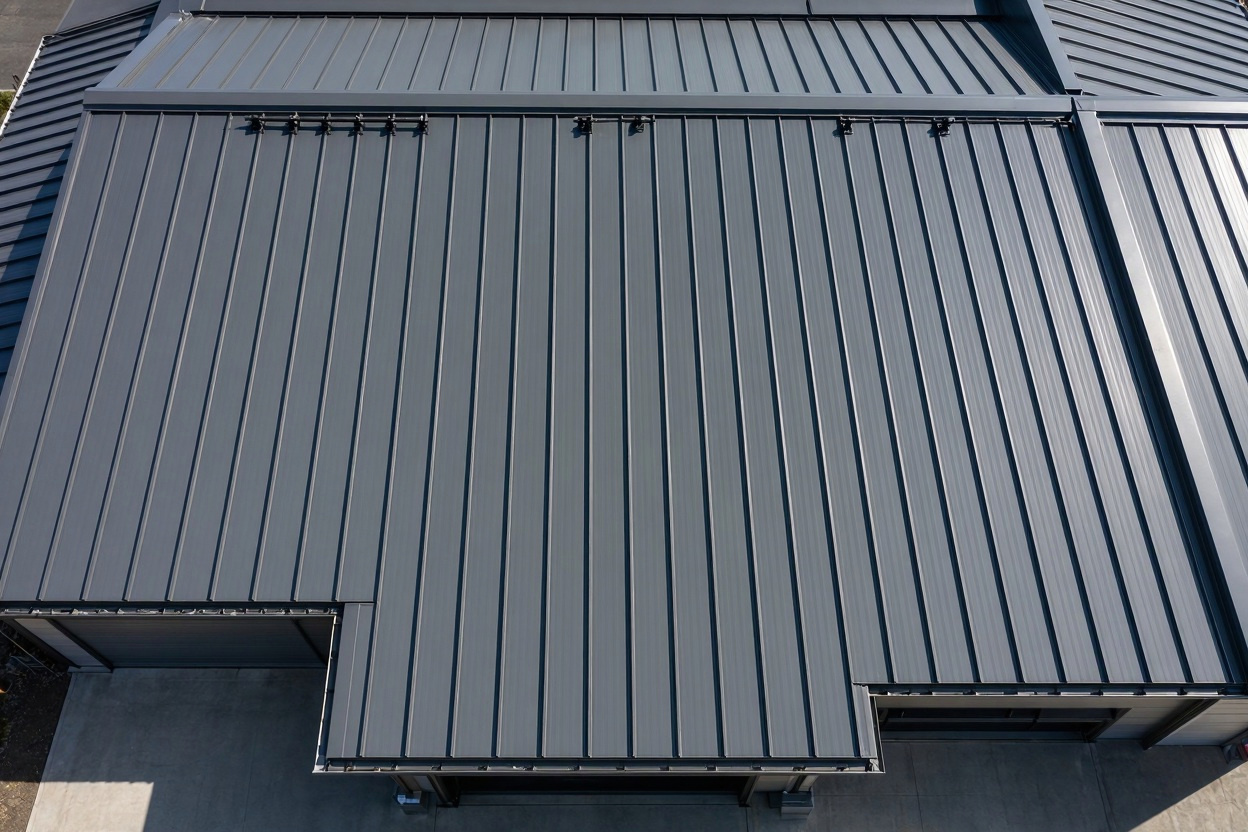 04 / METAL PANEL SYSTEM
Metal panel systems offer options for commercial and industrial buildings, with profiles and attachment methods selected for the project.
Explore commercial metal roofing →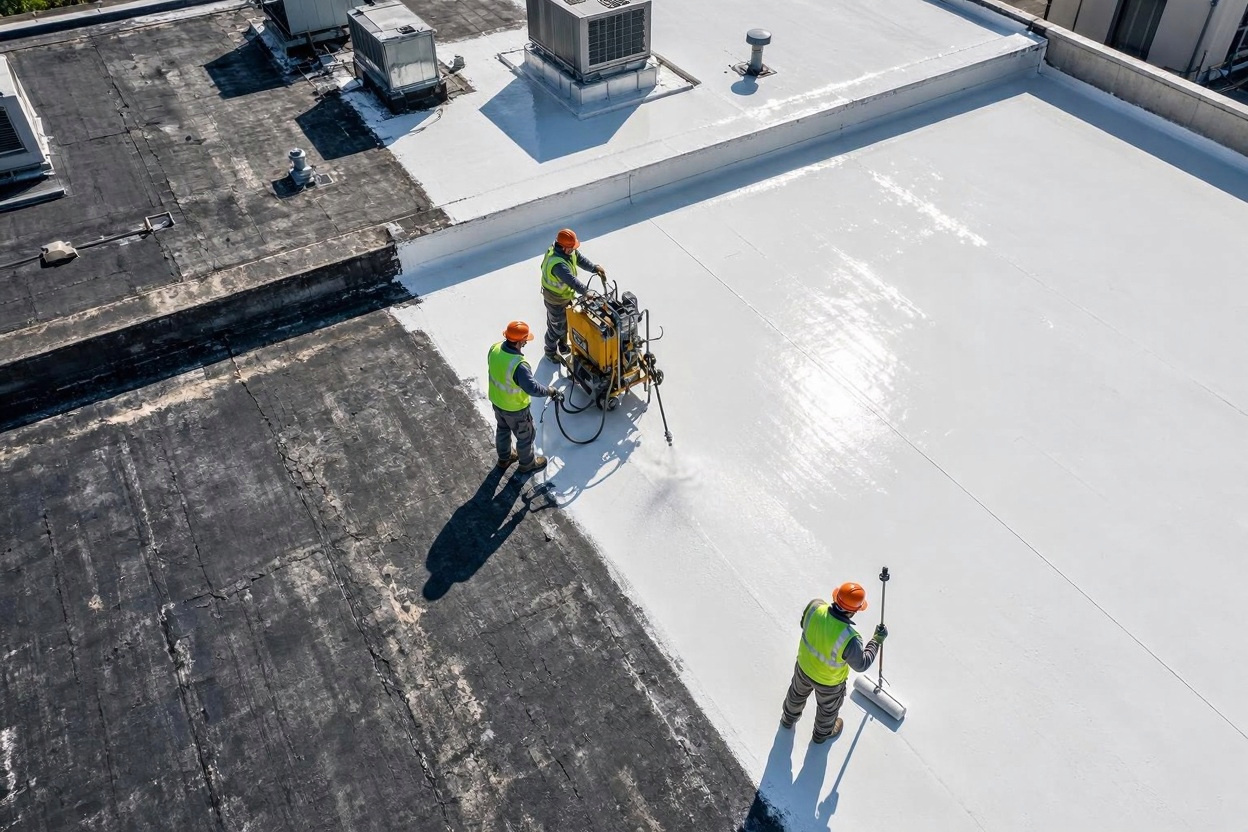 05 / ROOF RESTORATION
A high-performance liquid membrane that restores weathered flat roofs with a seamless, brilliant white shield. It delivers superior UV reflectivity, reduces cooling costs, and provides permanent resistance to ponding water and leaks.
Explore roof coatings →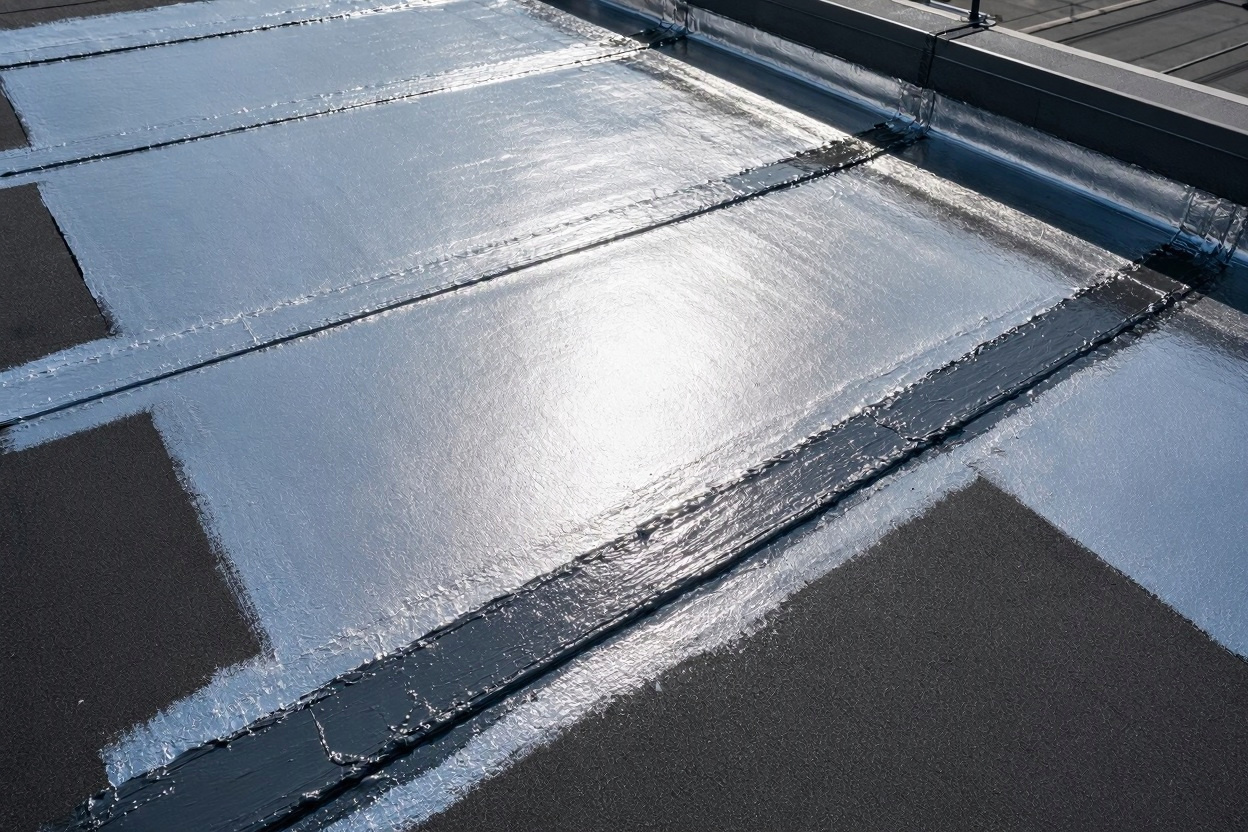 06 / ROOF RESTORATION
A heavy-duty reflective coating that seals and protects asphalt and metal commercial roofs with a metallic silver leafing finish. It inhibits rust, seals roof seams, and bounces heat away to significantly reduce thermal stress and energy costs.
Explore roof coatings →BUILT AROUND THE PROPERTY
Building use, roof design and operational requirements all influence the roofing solution. Different property types bring different considerations to the project.
Large roof areas, drainage capacity, insulation and access for maintenance are important considerations for warehouse and distribution facilities.
Office properties may require careful coordination around rooftop equipment, insulation, occupied spaces and building operations.
Roofing work at retail locations may need to account for customer access, trading hours, signage and the protection of occupied spaces.
Industrial buildings can include rooftop plant, ventilation equipment and specialised operational requirements that influence roofing design and access.
COMMERCIAL ROOFING SERVICES
Commercial roofing needs can range from addressing an isolated leak to planning a complete roof replacement. Understanding the condition of the existing roof is an important starting point.
Installation of an appropriate roofing system based on the building design, project requirements and product specifications.
Replacement planning for ageing, damaged or unsuitable commercial roofing assemblies.
Investigation and repair of roofing issues, including leaks, damaged membranes, flashing concerns and other areas requiring attention.
Periodic assessments can help identify developing problems, drainage issues and visible deterioration.
Where the existing roof is suitable, restoration options may provide an alternative to full replacement.
Reviewing roof condition, building requirements and possible system options before a project moves forward.
PLAN BEYOND THE ROOF SURFACE
Choosing a commercial roofing system involves more than comparing material prices. The roof must work with the building's structure, intended use and environmental conditions.
A suitable assessment considers the existing roof assembly, drainage, insulation, rooftop equipment and the practical requirements of the property.
Low-slope roofs need carefully planned drainage, including appropriate falls, outlets and overflow provisions.
Roof insulation, membrane colour, air leakage and the building's overall construction can influence energy use and indoor comfort.
Moisture, damaged decking, trapped water and previous repairs can affect whether a roof is suitable for restoration or requires replacement.
Work scheduling, site access, safety arrangements and protection of occupied areas should be considered during project planning.
Manufacturer requirements, approved installation methods, warranty conditions and applicable building codes all matter when selecting a system.
A CLEARER PROJECT PATH
A structured approach helps property owners understand the condition of the roof, available options and the work involved.
Discuss the property, roofing concerns, project objectives and any known issues affecting the building.
Review the existing roofing assembly, visible condition, drainage and relevant building requirements.
Consider suitable roofing options, project scope, materials and installation requirements.
Establish the proposed scope, access arrangements, scheduling considerations and project details.
Complete the agreed work in accordance with the selected system's requirements and applicable standards.
Review completed work, relevant product documentation and maintenance considerations.
COMMON QUESTIONS
Answers to common questions from commercial property owners and building decision-makers.
There is no single best system for every commercial building. Roof slope, structure, drainage, insulation, existing conditions, budget and manufacturer specifications all influence the choice.
TPO is a thermoplastic single-ply membrane, while EPDM is a synthetic rubber membrane. They differ in material composition, seam methods, installation options and product characteristics. The appropriate choice depends on the building and system design.
Some roofing assemblies permit an overlay under specific conditions. The existing roof must be assessed for moisture, structural suitability, compatibility, code requirements and manufacturer approval before this approach is considered.
Inspection frequency depends on the roof system, building use, environmental exposure and manufacturer recommendations. Inspections after significant weather events can also help identify visible damage.
In some cases, localised repairs or restoration may be suitable. Widespread deterioration, trapped moisture, structural problems or extensive system failure may make replacement more appropriate. A proper assessment is needed.
Project duration depends on roof size, system type, weather, access, existing roof conditions, material availability and operational constraints. A project-specific schedule is needed for a realistic estimate.
Some projects can be phased or scheduled to reduce disruption. This depends on the building, work area, safety requirements, weather protection and the nature of the roofing work.
No. The existing roof must be compatible with the selected coating and in a suitable condition. Surface preparation, moisture, adhesion and manufacturer requirements must be evaluated before application.
START WITH THE RIGHT INFORMATION
Whether you're considering a new roofing system, replacement, repairs or an assessment of an existing roof, start by outlining your property's requirements.