ROOFING MATERIAL GUIDE

Metal Roofing

A modern roofing option known for its clean appearance, material versatility and long-term performance when properly designed and installed.

A DIFFERENT APPROACH TO ROOFING

Strength, clean lines and material versatility

Metal roofing is available in several profiles, finishes and panel systems. Its appearance can range from contemporary standing-seam designs to more traditional exposed-fastener panels.

The right system depends on the building's design, roof structure, budget, drainage requirements and local weather conditions. Panel quality matters, but so do the details beneath and around the roof.

This guide explains the main metal roofing options and the practical considerations homeowners should understand before choosing a system.

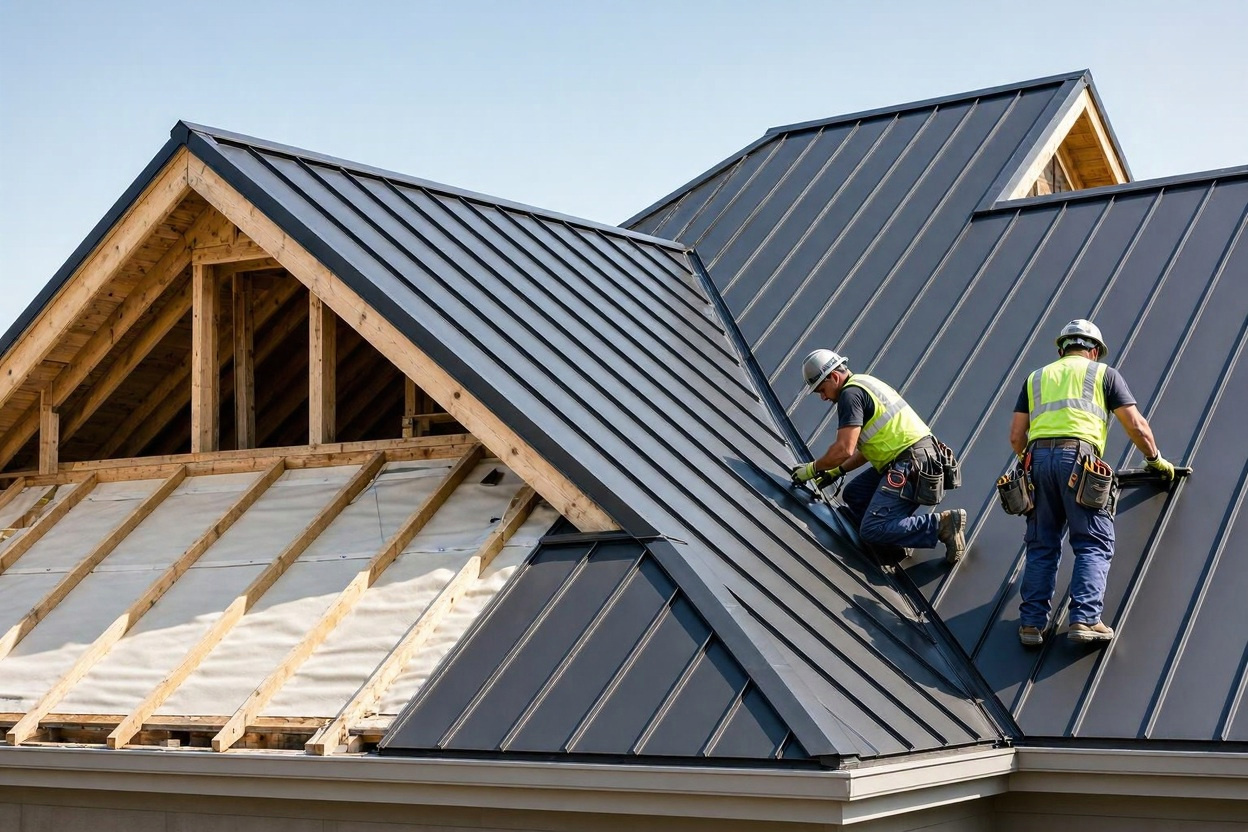
Standing seam metal roofing installed across a residential roofStanding seam metal roofing

UNDERSTANDING THE OPTIONS

Common types of metal roofing

Metal roofing is not one single product. Different panel profiles and attachment methods create different appearances and installation requirements.

01

Standing Seam

Standing seam panels feature raised vertical seams that connect adjacent panels. Many systems use concealed clips or fasteners, creating a clean roof surface with fewer exposed attachment points.

  • Distinctive raised seam profile
  • Concealed fastening on many systems
  • Often suited to contemporary architecture
  • Requires careful detailing at roof edges and penetrations
02

Exposed-Fastener Panels

These panels are mechanically fastened through the panel face. They are commonly used on agricultural, utility and some residential buildings, depending on the product and design.

  • Visible fastener heads and washers
  • Often a more economical panel system
  • Fastener condition needs periodic attention
  • Correct installation is essential for water resistance
03

Metal Shingles and Tiles

Metal shingles and tile-profile panels are shaped to resemble traditional roofing materials while using metal as the primary roofing surface.

  • Available in varied architectural profiles
  • Can complement traditional home designs
  • Individual products have different fixing systems
  • Finish and profile affect the final appearance

WHY CONSIDER METAL?

Potential advantages of metal roofing

A properly selected and installed metal roof can offer several practical benefits. Actual performance depends on the specific product, building design and installation quality.

01

Material Durability

Suitable metal roofing products are designed to withstand normal outdoor exposure. Protective coatings and correct detailing help manage corrosion and weathering.

02

Design Flexibility

Panel profiles, colours and finishes provide options for modern, traditional and functional building styles.

03

Relatively Lightweight

Many metal roofing systems weigh less than some traditional roofing materials. The existing roof structure must still be assessed before any replacement.

04

Reflective Finishes

Certain colours and coatings can reflect more solar energy than darker conventional surfaces. Performance varies by product, colour and roof assembly.

05

Recyclability

Many metal roofing materials can be recycled. The availability and extent of recycling depend on the metal type and local facilities.

06

Low Routine Upkeep

Metal roofs generally do not require the same type of individual shingle replacement associated with some other roofing systems. Inspections and maintenance are still important.

MAKE AN INFORMED DECISION

What to consider before choosing metal

Metal roofing can be an excellent option, but it is not automatically the best fit for every property. Consider the following before committing to a system.

Initial project cost

Some metal systems, particularly standing seam, can have a higher upfront cost than common asphalt shingle options.

Installation precision

Panel alignment, flashing, fastener placement and expansion allowances all affect the finished roof system.

Noise and roof assembly

Rain noise depends on the complete roof assembly, including insulation, decking and the space beneath the roof. It should not be judged by the metal panel alone.

Expansion and contraction

Metal changes dimension as temperatures fluctuate. The selected panel system must accommodate movement through its clips, fasteners and detailing.

Coatings and corrosion

Metal type, protective coating, cut edges and environmental exposure all influence corrosion resistance and finish longevity.

BEYOND THE PANELS

The components of a metal roofing system

A roof is a complete assembly. The panels are only one part of a system that must manage water, airflow, movement and structural loads.

01

Roof Deck

The supporting surface must be suitable for the chosen roofing system. Existing decking should be checked for deterioration, damage and adequate fastening.

02

Underlayment

An appropriate underlayment provides an additional layer of protection beneath the panels. Product selection depends on the roof design and manufacturer requirements.

03

Flashing and Trim

Valleys, ridges, eaves, wall connections and roof penetrations require correctly designed flashing and compatible trim components.

04

Fasteners and Clips

The attachment method must match the panel system. Correct fastener type, spacing and installation are important to structural performance and water management.

05

Ventilation and Insulation

The roof assembly should account for ventilation, insulation and moisture management. Requirements vary with the building and roof construction.

06

Drainage

Roof slope, panel profile, gutters and downspouts must work together to direct water away from the building.

NORTH TEXAS CONSIDERATIONS

Metal roofing in the DFW climate

Homes in the Dallas–Fort Worth area experience hot summers, intense sunlight, heavy rainfall and occasional severe storms. These conditions make product selection and installation details particularly important.

When evaluating a metal roof, consider the panel's wind rating, approved fastening method, coating specification and compatibility with the roof's slope and design.

Hail performance varies considerably between products, metal thicknesses and panel profiles. Ask for the manufacturer's documented impact-resistance information rather than assuming all metal roofing performs the same way.

01

Heat and sunlight

Colour and coating choices can influence solar reflectance and roof surface temperatures.

02

Wind exposure

Panel attachment, edge details and roof geometry matter when evaluating wind resistance.

03

Hail and storms

Review product-specific impact ratings, warranties and limitations before selecting a panel.

04

Rainwater management

Correct slopes, seams, flashing and drainage help manage heavy rainfall.

LOOK AFTER YOUR ROOF

Metal roof maintenance

Metal roofing is not maintenance-free. Periodic visual checks can help identify developing issues before they become more serious.

Inspect fasteners and seams

Look for visibly loose fasteners, displaced panels or damaged seams. Some systems have concealed clips and require specialist inspection.

Check flashing and sealants

Pay attention to roof penetrations, wall connections, valleys and other transitions where water can enter.

Keep drainage clear

Remove accumulated leaves and debris from gutters and drainage points so water can flow away from the property.

Look for finish damage

Scratches, damaged coatings and exposed metal should be assessed using the manufacturer's repair recommendations.

Roof inspections can be dangerous. Avoid walking on the roof yourself; use a qualified roofing professional when closer inspection is needed.

COMMON QUESTIONS

Metal roofing FAQs

Straightforward answers to common questions about metal roofing systems and what to consider before installation.

How long does a metal roof last?

Service life varies by metal type, coating, panel system, installation quality, maintenance and environmental exposure. Ask the manufacturer for product-specific service-life information and warranty terms.

Is metal roofing noisy when it rains?

Not necessarily. Noise depends on the entire roof assembly, including the decking, insulation, underlayment and interior construction. A properly designed assembly can help manage sound.

Is metal roofing suitable for hot climates?

It can be. Certain coatings and lighter colours offer reflective properties that may help reduce solar heat gain. The full roof assembly and attic insulation remain important.

Can metal roofing be installed over existing shingles?

Some systems may allow installation over an existing roof under specific conditions, while others require removal. Local code, manufacturer instructions, roof condition and the proposed assembly must all be considered.

Does metal roofing attract lightning?

Metal roofing does not make a building more likely to be struck by lightning. Lightning protection depends on the building's overall design and exposure, not simply the roofing material.

Will a metal roof rust?

Appropriate roofing metals and protective coatings are designed to resist corrosion. Damage to coatings, incompatible materials, trapped moisture and unsuitable environmental conditions can increase corrosion risk.

Can metal roofing withstand hail?

Hail performance depends on the product, metal thickness, panel profile and impact conditions. Some panels may dent even when they continue to function. Check documented product ratings and warranty exclusions.

Is standing seam better than exposed-fastener roofing?

Neither system is automatically better for every project. Standing seam commonly uses concealed attachments, while exposed-fastener panels use visible fasteners. Cost, roof design, maintenance and manufacturer specifications should guide the choice.

PLAN YOUR ROOFING PROJECT

Considering a metal roof?

Start with your property's requirements, compare suitable systems and build a clearer picture of the project scope.

Summit Roofing Solutions is a fictional demonstration business. This material guide is for general educational purposes only. Product specifications, installation requirements, warranties and building-code requirements vary. Consult the relevant manufacturer documentation and qualified professionals for project-specific advice.