
01
Reflective Surface
Many TPO membranes have a light-coloured surface designed to reflect a portion of the sun's energy. Actual performance depends on the product, roof assembly, climate and maintenance.
COMMERCIAL ROOFING SYSTEMS
A modern single-ply roofing solution for commercial buildings, combining a reflective surface with a carefully detailed, professionally installed waterproofing system.
A SINGLE-PLY ROOFING OPTION
Thermoplastic Polyolefin, commonly known as TPO, is a single-ply membrane roofing material used on many commercial and industrial buildings. It is typically installed over a suitable roof deck and insulation system to create a continuous weather-resistant roof covering.
TPO membranes are commonly recognised by their light-coloured, reflective surface. Depending on the selected product and roof assembly, they may be mechanically attached, fully adhered or installed using other manufacturer-approved methods.
The right system depends on the building, existing roof construction, drainage, insulation requirements, exposure and project budget. A proper assessment should come before choosing a membrane or installation method.
Arrange a commercial roof assessment →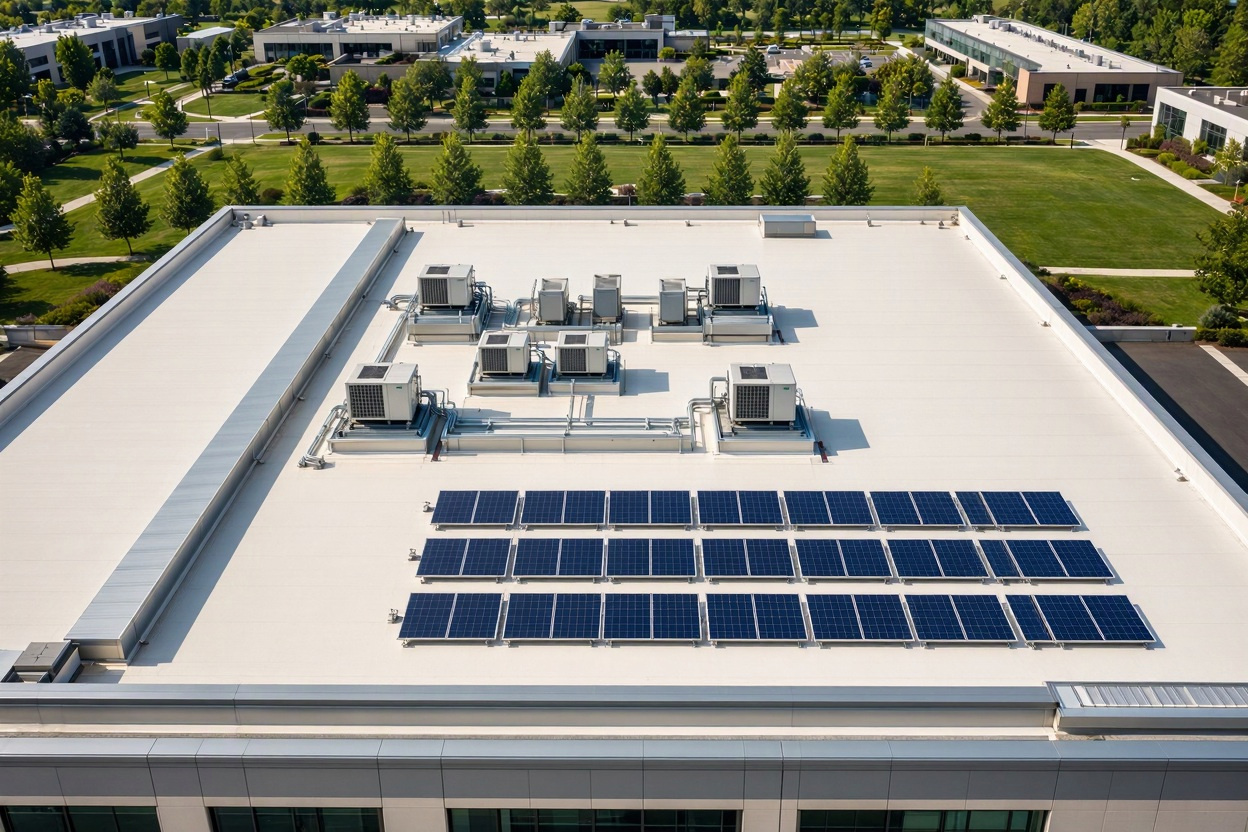
Single-ply membrane roofing for suitable commercial applications
UNDERSTANDING THE SYSTEM
TPO is one of several options available for flat and low-slope commercial roofs. Its characteristics can make it a practical choice for certain buildings and operating requirements.
Many TPO membranes have a light-coloured surface designed to reflect a portion of the sun's energy. Actual performance depends on the product, roof assembly, climate and maintenance.
TPO membrane seams are commonly joined using hot-air welding. Correct preparation, equipment settings and workmanship are essential to achieving consistent seam quality.
Depending on the roof design and manufacturer's specifications, TPO may be mechanically attached, fully adhered or installed using an approved alternative assembly.
TPO is commonly used on commercial roofs with low slopes, where drainage design, membrane detailing and correctly formed transitions are particularly important.
TPO products are available in different thicknesses, specifications and system configurations. Selection should be based on the building and project requirements.
Routine inspections can help identify damaged membrane areas, seam concerns, blocked drains and deteriorating details before they develop into more extensive problems.
SUITABLE BUILDING TYPES
TPO is used across a range of commercial and industrial applications. Suitability depends on the existing structure, roof design, local conditions and the selected roofing system.
Large roof areas where membrane selection, drainage planning and installation quality are important considerations.
Commercial properties where roof access, equipment penetrations and ongoing building operations must be considered.
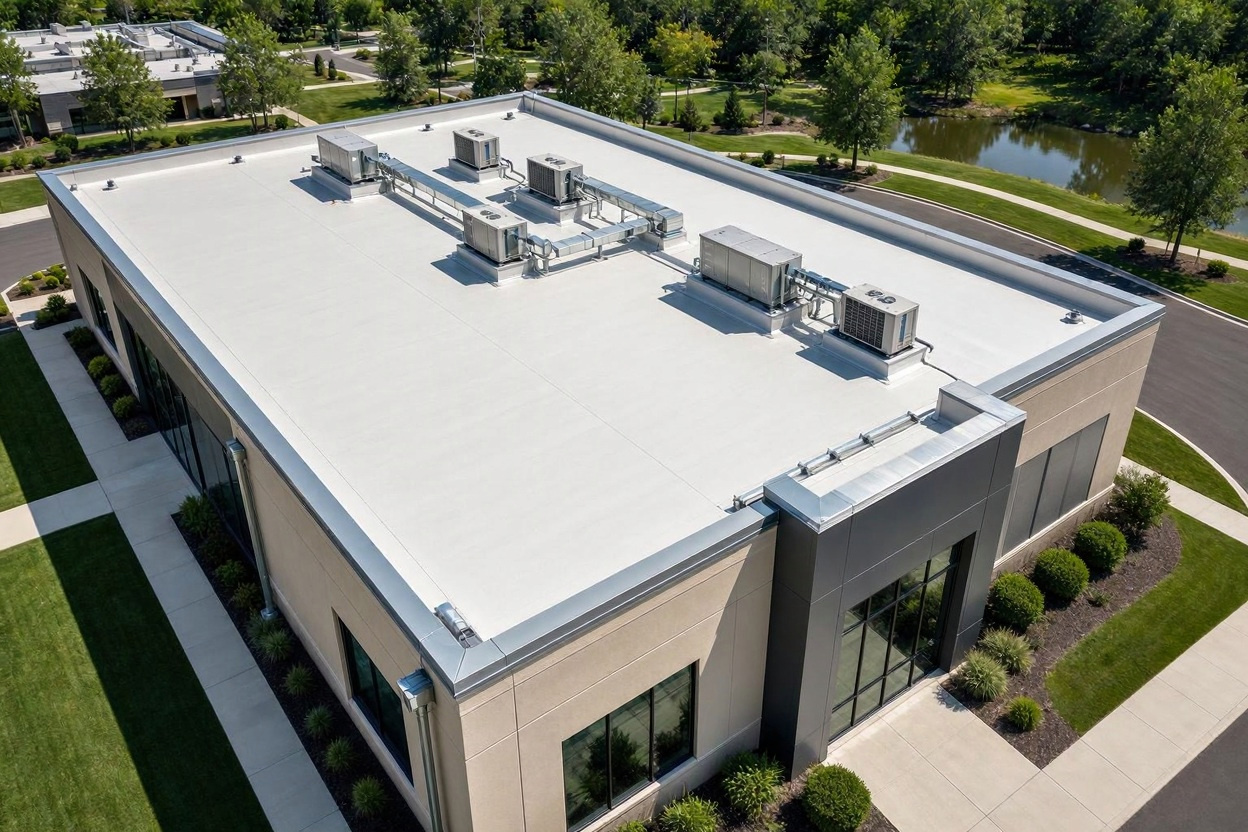
Suitable roof assemblies can be specified for office buildings with low-slope roof designs and appropriate structural support.
Roof projects where access planning, building use, disruption management and long-term maintenance need attention.
SYSTEM CONFIGURATION
TPO systems can be installed using different attachment methods. The appropriate method is determined by the roof assembly, substrate, wind-uplift requirements, manufacturer specifications and project conditions.
Fasteners and plates secure the membrane at specified locations. The membrane seams are then welded to form a continuous covering.
An approved bonding adhesive is used to secure the membrane to the prepared substrate or insulation, following the system manufacturer's requirements.
Some projects may use alternative configurations. Compatibility and installation requirements must be confirmed for the selected membrane system.
FROM ASSESSMENT TO COMPLETION
A successful roofing project starts with understanding the building and selecting an appropriate system. Installation should follow the product specifications and project design.
Review the existing roof, substrate, drainage, penetrations, insulation and any visible areas of deterioration.
Determine the suitable membrane, thickness, attachment method, insulation and detailing requirements.
Prepare the roof assembly in accordance with the specified system, addressing substrate and installation requirements.
Position and secure the membrane, complete hot-air welded seams and form the required roof details.
Review seams, penetrations, terminations and drainage details. Any required testing should follow the specified procedure.
Establish an inspection and maintenance approach suited to the building, roof system and operating environment.
BEFORE YOU SPECIFY
TPO is not a one-size-fits-all solution. The quality and performance of the finished roof depend on the complete assembly, product selection, installation and ongoing care.
A commercial roof assessment should consider the following before a system is selected.
Roof slope, drain locations and water flow should be reviewed. Persistent ponding may require corrective drainage or structural consideration.
The existing deck and substrate must be suitable for the selected assembly. Damaged or unsuitable areas may require repair or replacement.
Weld quality, penetrations, edges, corners and transitions are critical details that require appropriate workmanship and inspection.
HVAC equipment, service routes and regular foot traffic should be considered when planning protection and maintenance access.
Membrane compatibility, approved accessories, installation conditions and warranty requirements vary by manufacturer and product.
EXPLORE YOUR OPTIONS
TPO is one of several commercial roofing options. The best choice depends on the building, existing roof, project objectives and lifecycle considerations.
A synthetic rubber single-ply membrane used in many low-slope commercial roofing applications.
Explore EPDM Roofing →ALTERNATIVE SYSTEMA multi-layer bituminous roofing system commonly used on commercial low-slope roofs.
Explore Modified Bitumen →ALTERNATIVE SYSTEMMetal panel systems that may suit a range of commercial roof designs and building requirements.
Explore Commercial Metal Roofing →These systems have different construction methods and performance characteristics. A project-specific assessment is recommended before comparing costs or selecting a solution.
COMMON QUESTIONS
Helpful answers to common questions about commercial TPO membrane roofing.
TPO stands for Thermoplastic Polyolefin. It is a single-ply membrane material commonly used in commercial and industrial low-slope roofing systems.
TPO is commonly used on flat and low-slope commercial roofs. The roof must still have an appropriate design, drainage arrangement and compatible supporting assembly.
TPO membrane seams are commonly joined using hot-air welding. Proper equipment, preparation and workmanship are important to achieving reliable seam connections.
In some circumstances, an approved recover system may be possible. The existing roof condition, moisture, substrate, building requirements and manufacturer specifications must be assessed first. A complete tear-off may be necessary in other situations.
Service life varies with membrane quality, thickness, installation, climate, roof use and maintenance. The manufacturer's product information and project-specific warranty should be reviewed rather than relying on a universal lifespan estimate.
Yes. Periodic inspections are advisable. They can help identify debris, blocked drains, membrane damage, seam concerns and issues around roof penetrations or equipment.
Many TPO products have reflective surfaces that can reduce solar heat absorption compared with some darker roof surfaces. Actual energy performance depends on the complete roof assembly, insulation, climate, building use and product.
PLAN YOUR NEXT ROOFING PROJECT
Every building has different requirements. Start with a conversation about your property, existing roof and project objectives.